
Sara Alfieri
Bio
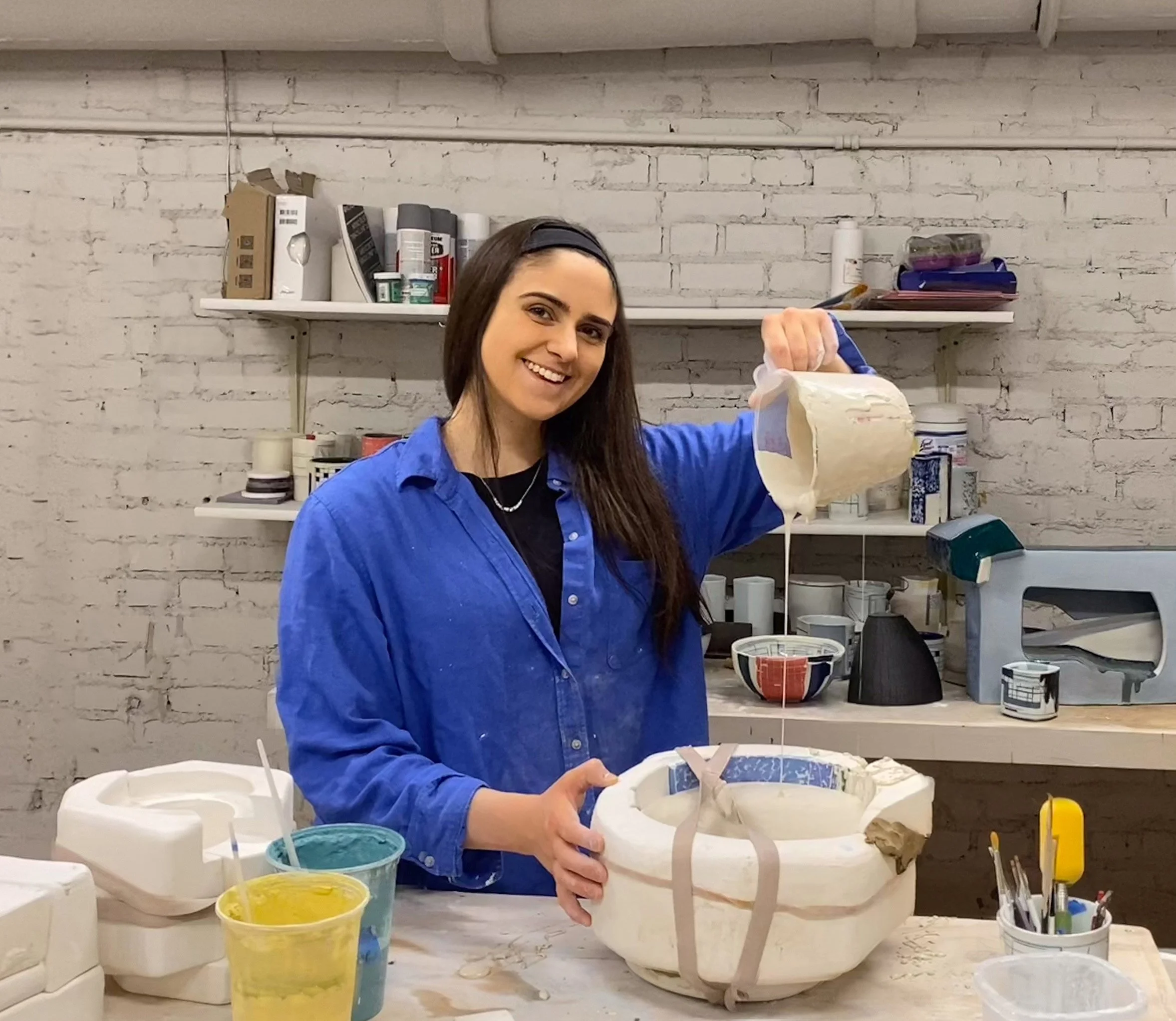
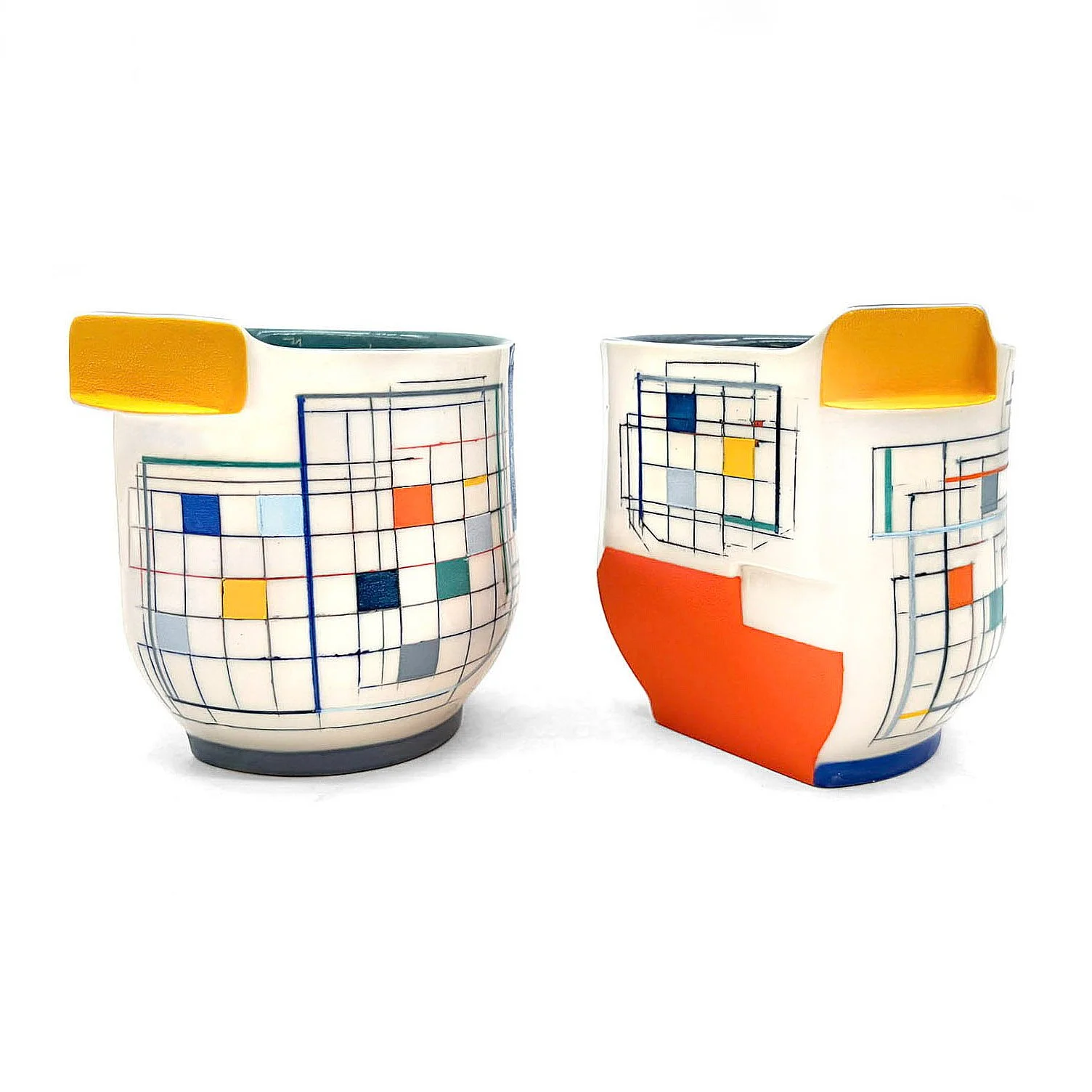
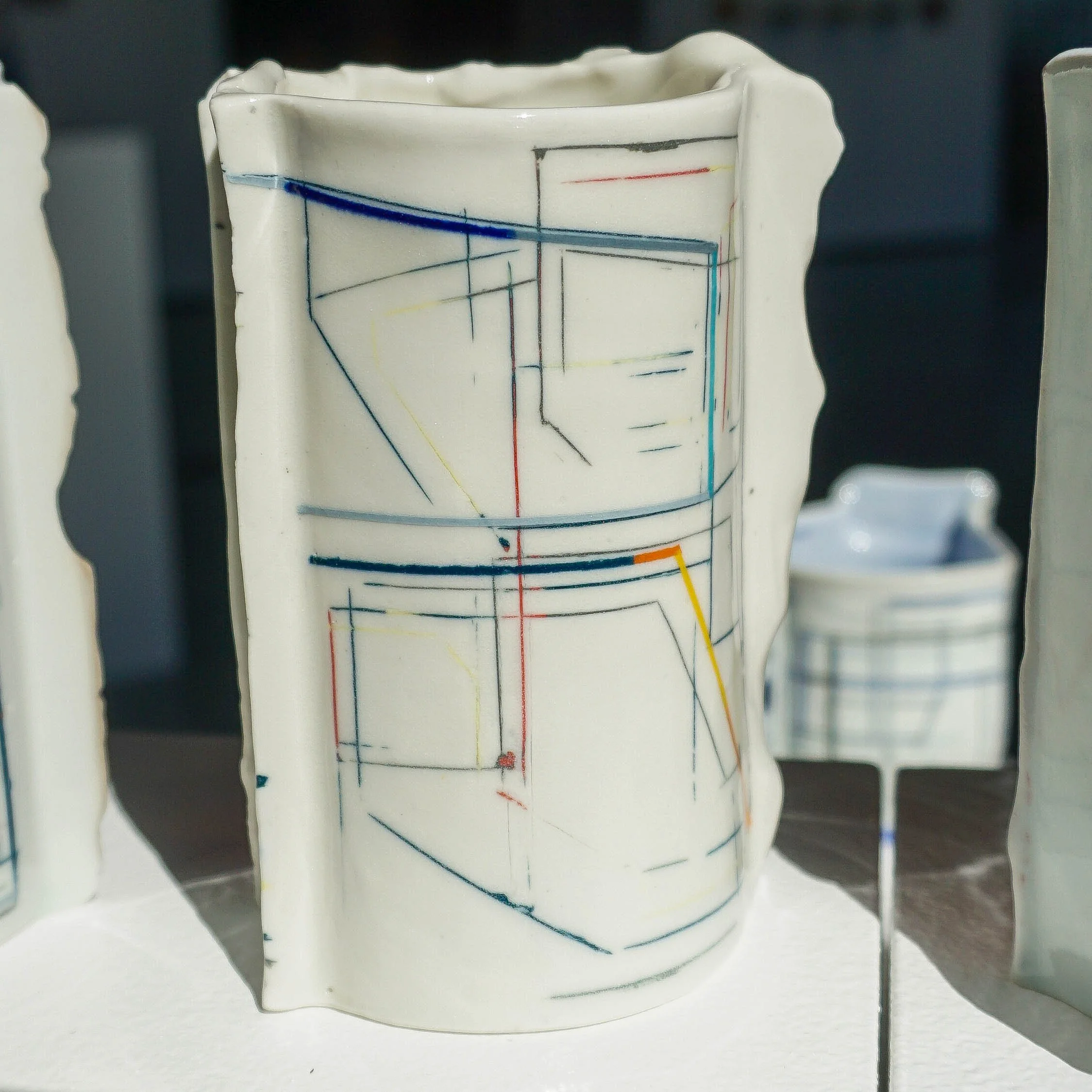
Sara Alfieri is a design-driven ceramic artist originally from Rochester, New York. She received her BFA from Illinois State University, completed a post-baccalaureate program at Colorado State University, and received her MFA from the University of Nebraska-Lincoln. Alfieri’s work investigates the layered relationship between design, function, and accessibility through digitally designed, slip-casted ceramic vessels and architecturally-inspired sculptures. Alfieri has been featured in several publications including the “Exposure” section of Ceramics Monthly and the Strictly Functional Pottery National Exhibition catalogues (2021, 2022, and 2024). She was awarded the “Studio Potter Merit Award” in the 2023 NCECA Student Juried Show, “Best in Show” in the 2023 Art Students League of Denver Biennial Exhibition, and is an invited artist in the 2026 American Pottery Festival. Alfieri has exhibited her work nationally in several recognized galleries and remains committed to supporting and engaging with gallery representation through the creation of both her ceramic vessels and sculptures.
Artist Statement
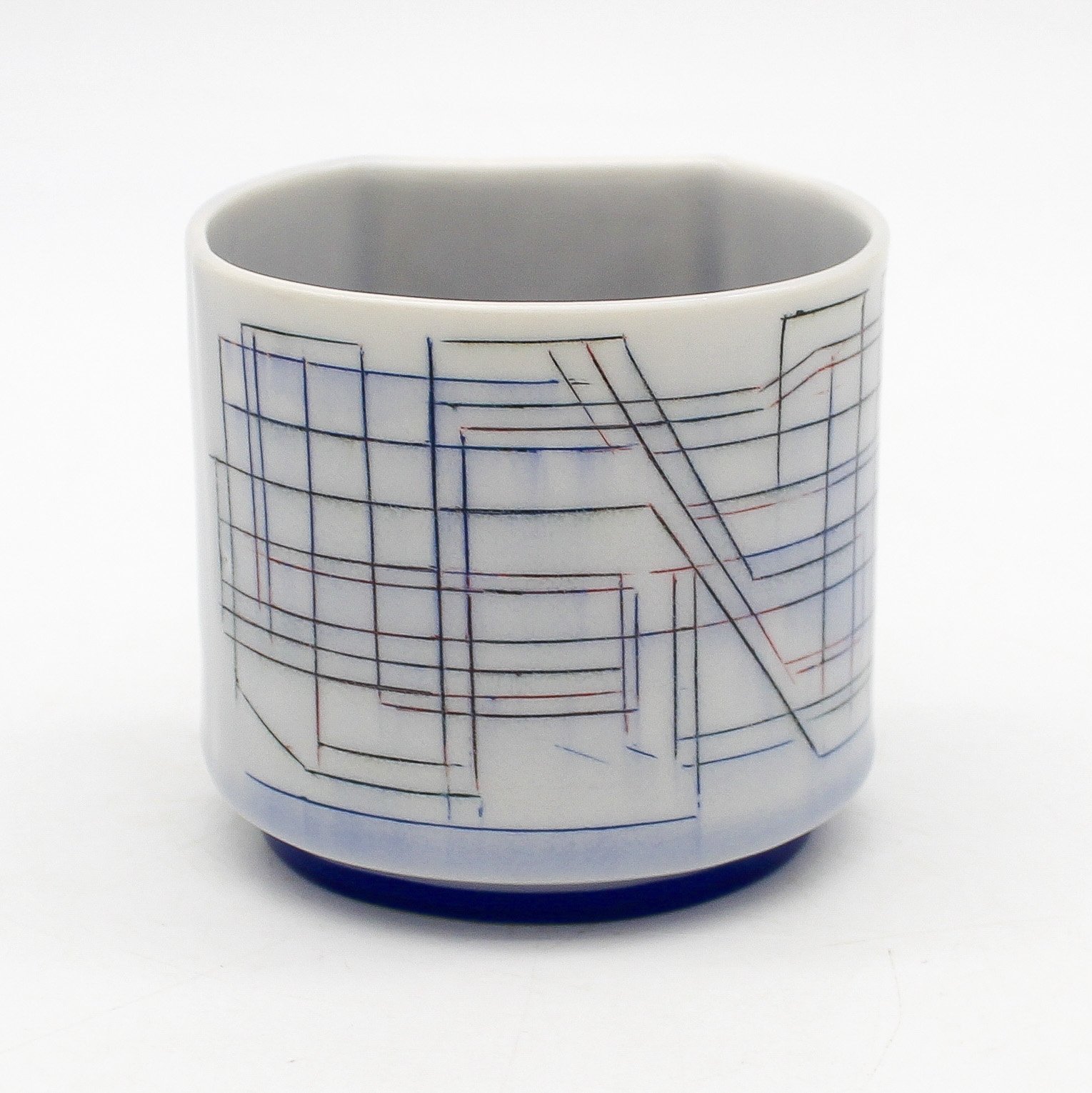
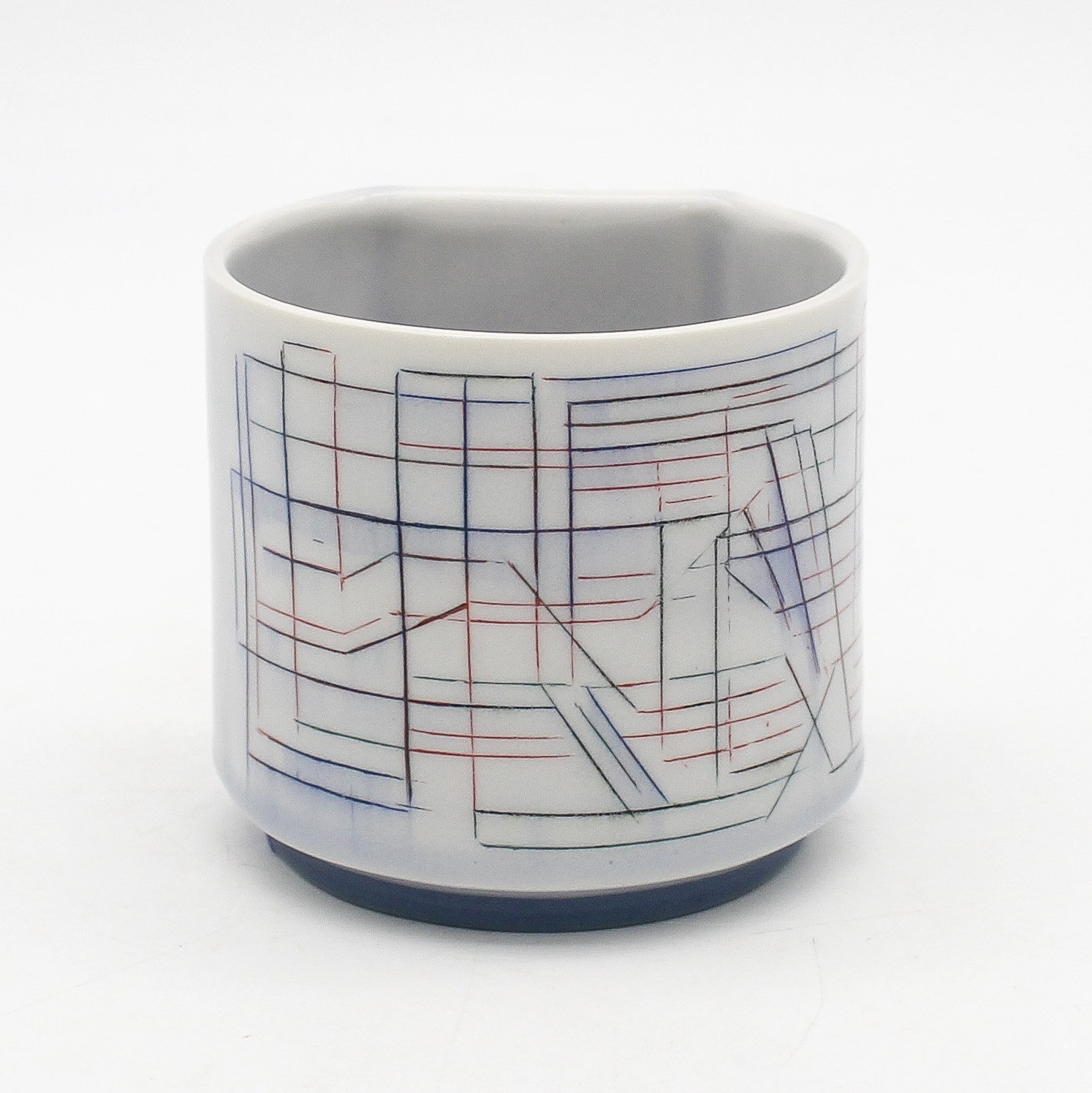
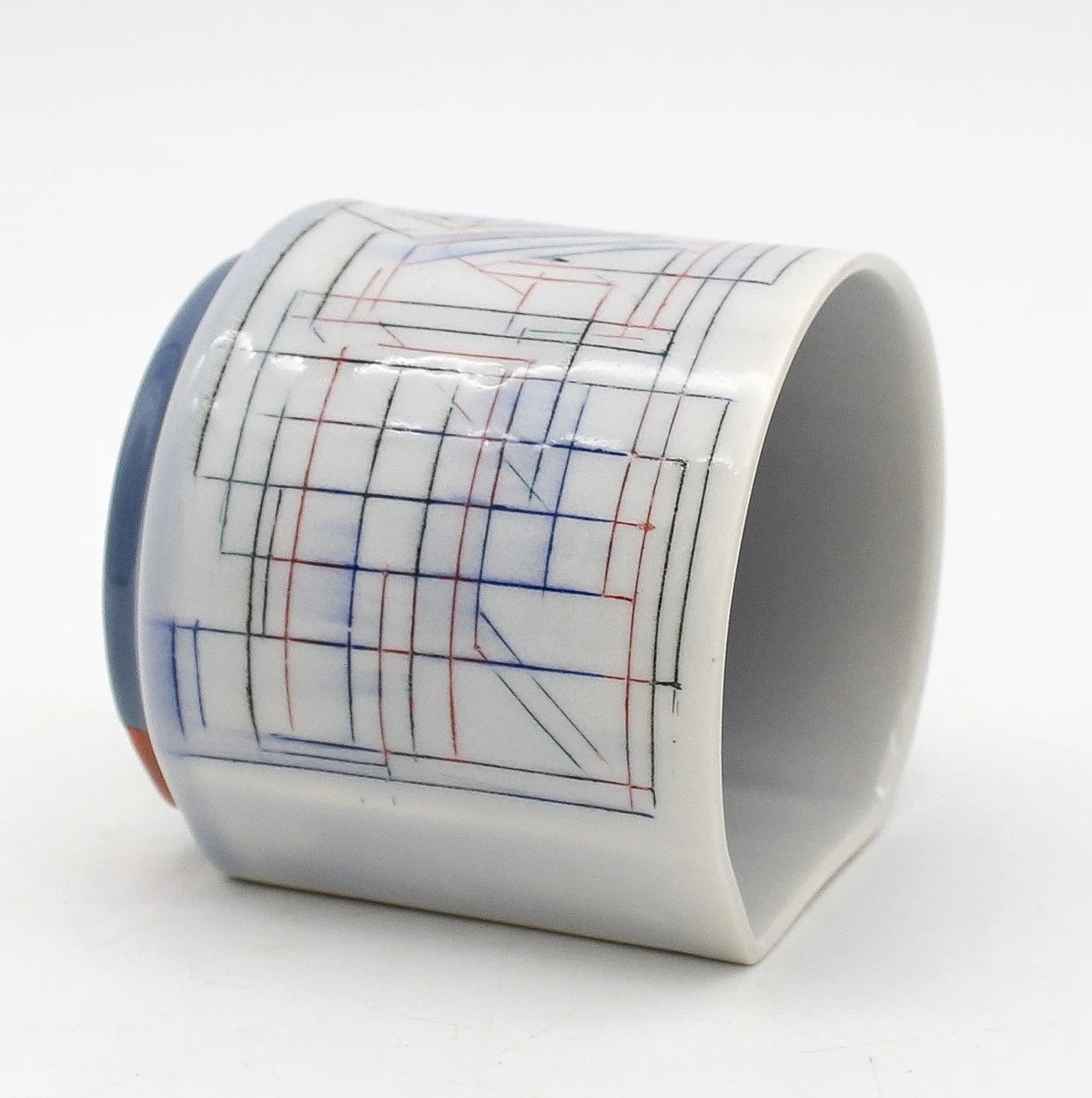
My work examines theories of perceptual psychology in design, architecture, and accessibility through the interaction between ceramic structures and vessels. Through fitting, placing, and interacting with forms and surfaces, I explore the interplay between design, function, and accessibility. These interactions invite a deeper consideration of how we navigate and experience space, both visually and physically.
While the vessels in my work can exist independently, their connection to the structures is revealing. The massive, geometric foundation of the structures contrasts with the soft, cylindrical nature of the vessels, mirrors the relationship between architecture and human experience. When placed on seemingly stable surfaces, vessels may subtly shift, drawing attention to how bodies adapt to spaces that may not fully accommodate them.
This connection between ceramics and architecture informs my use of digital fabrication alongside handbuilding. Using C.A.D. software, I develop plans built from planes, segments, and grids that influence construction and surface. Each piece begins with a plan that evolves in response to material and process, allowing me to navigate precision and intuition. In this way, I stand as both designer and artist, crafting work that is visually stimulating, functionally engaging, and attentive to how we inhabit and move through lived spaces.
Exhibitions
Sara Alfieri