Mathew McConnell: These Things Take Time
February 6 - May 2, 2026
at Belger Crane Yard Studios
2011 Tracy Avenue, Kansas City, MO 64108
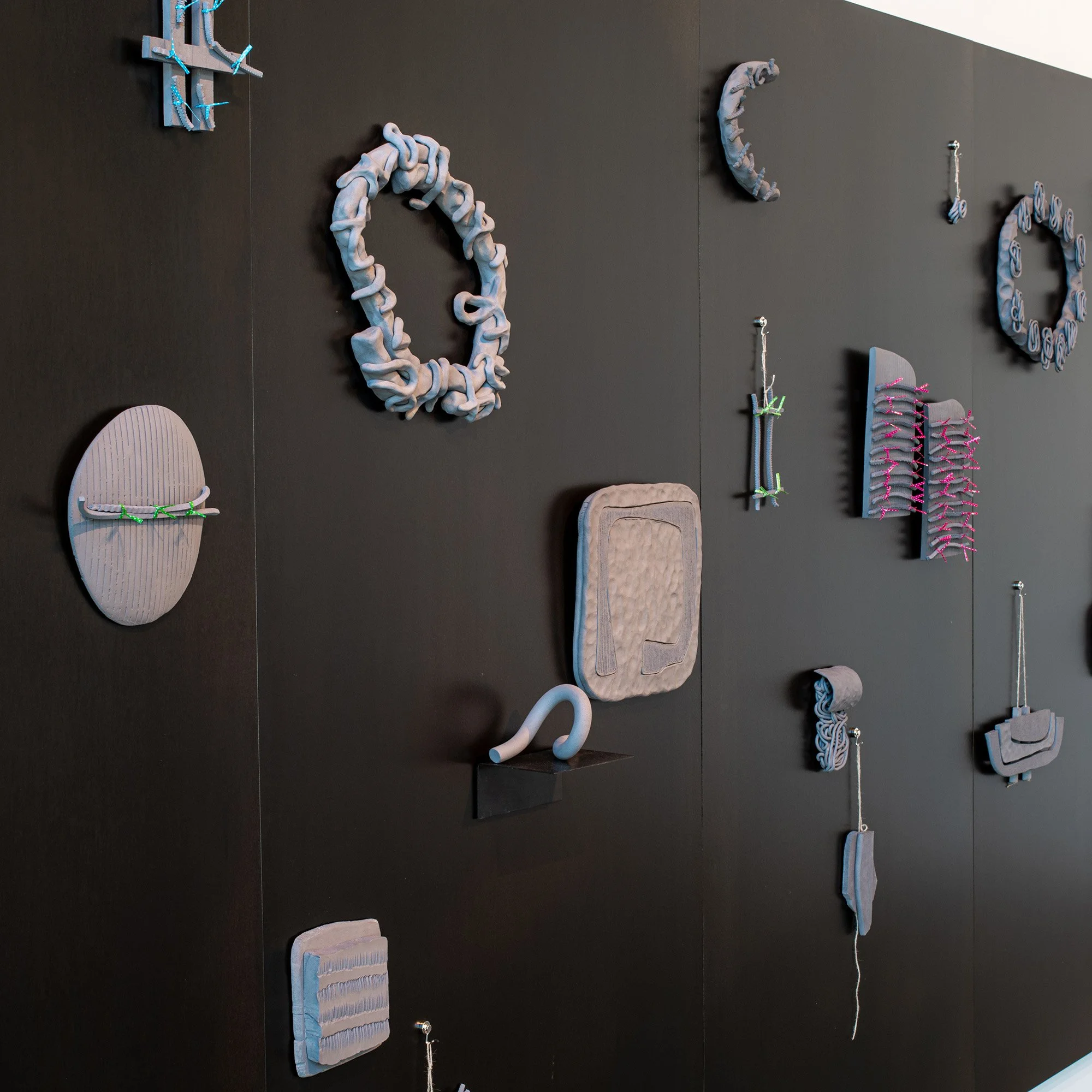
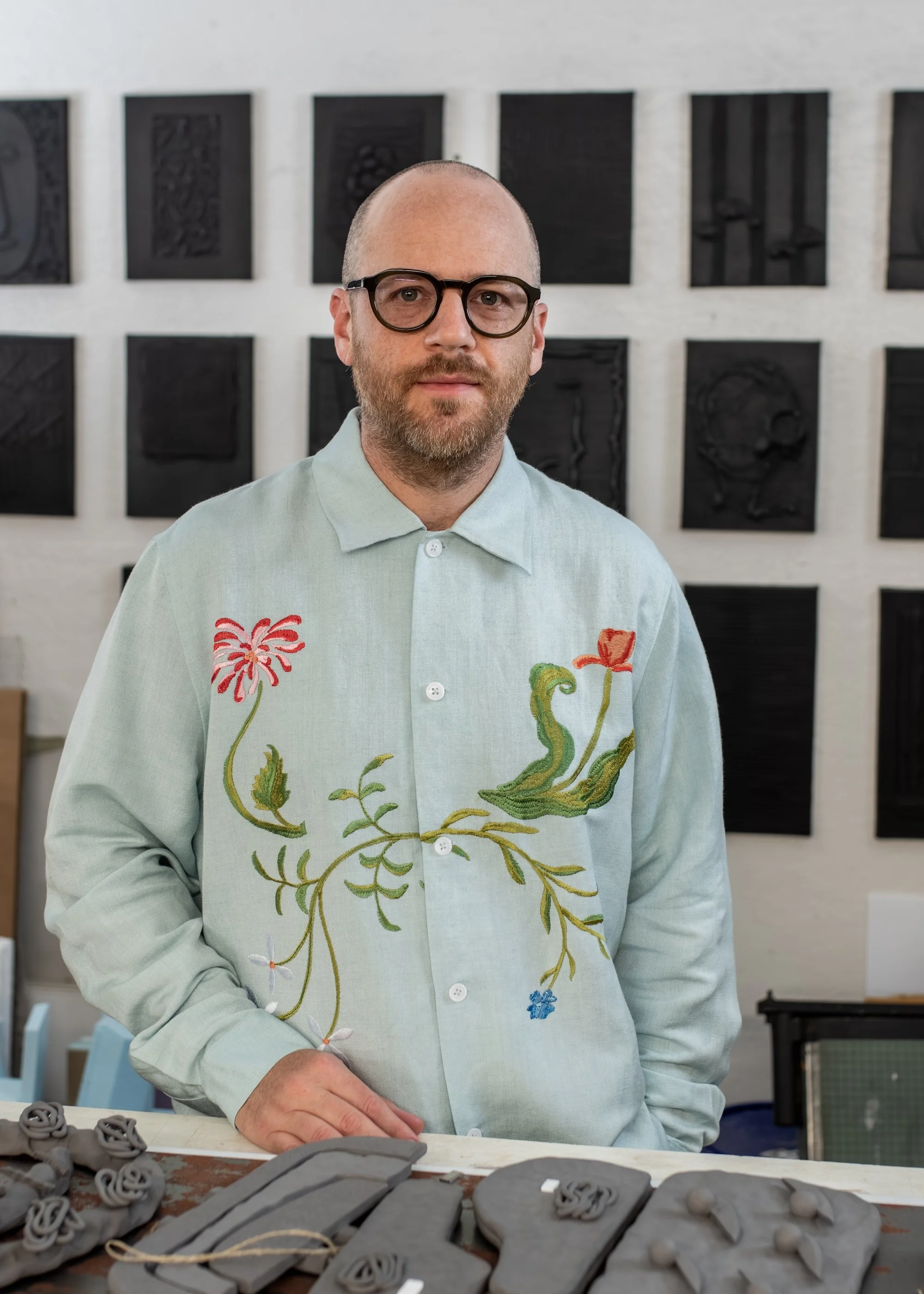
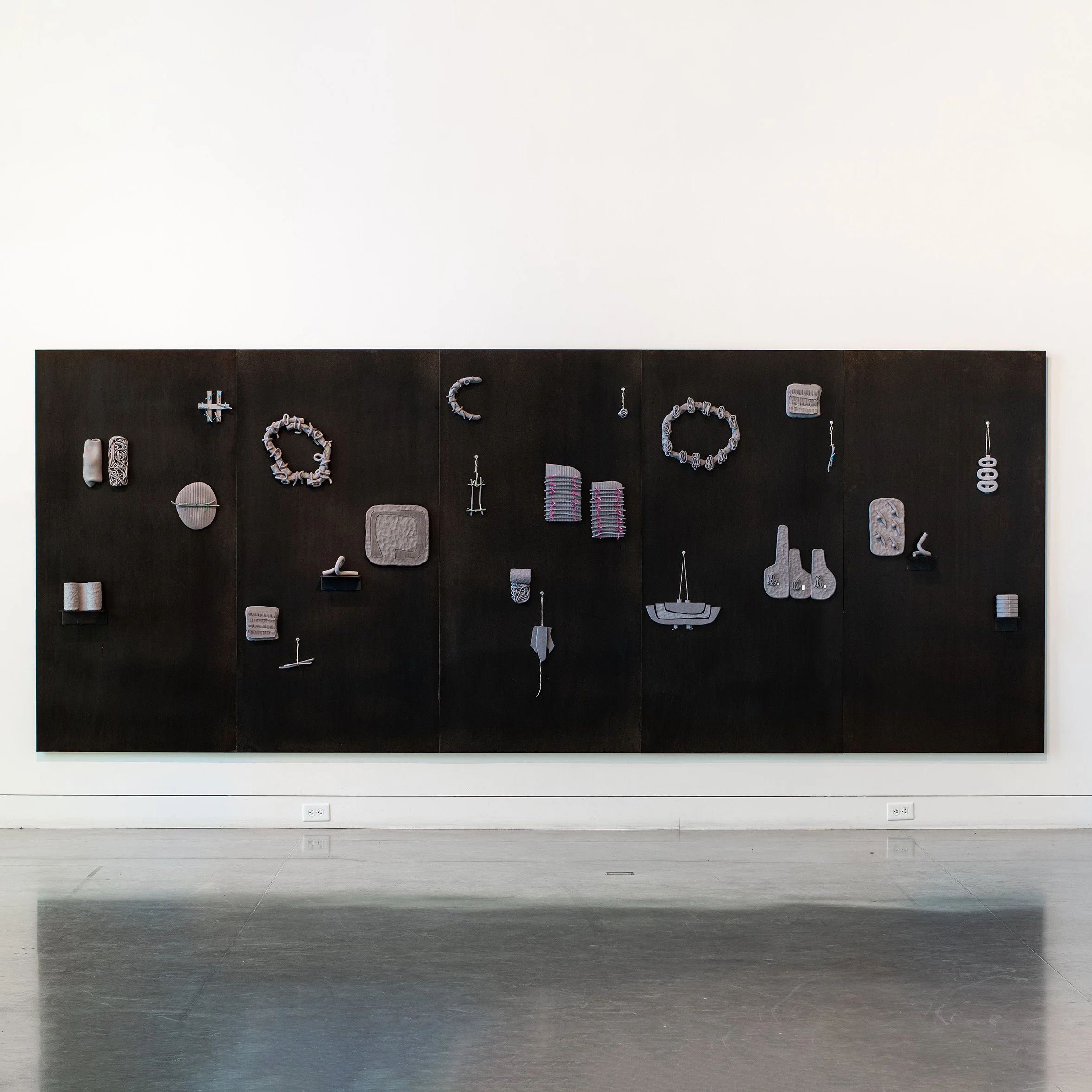
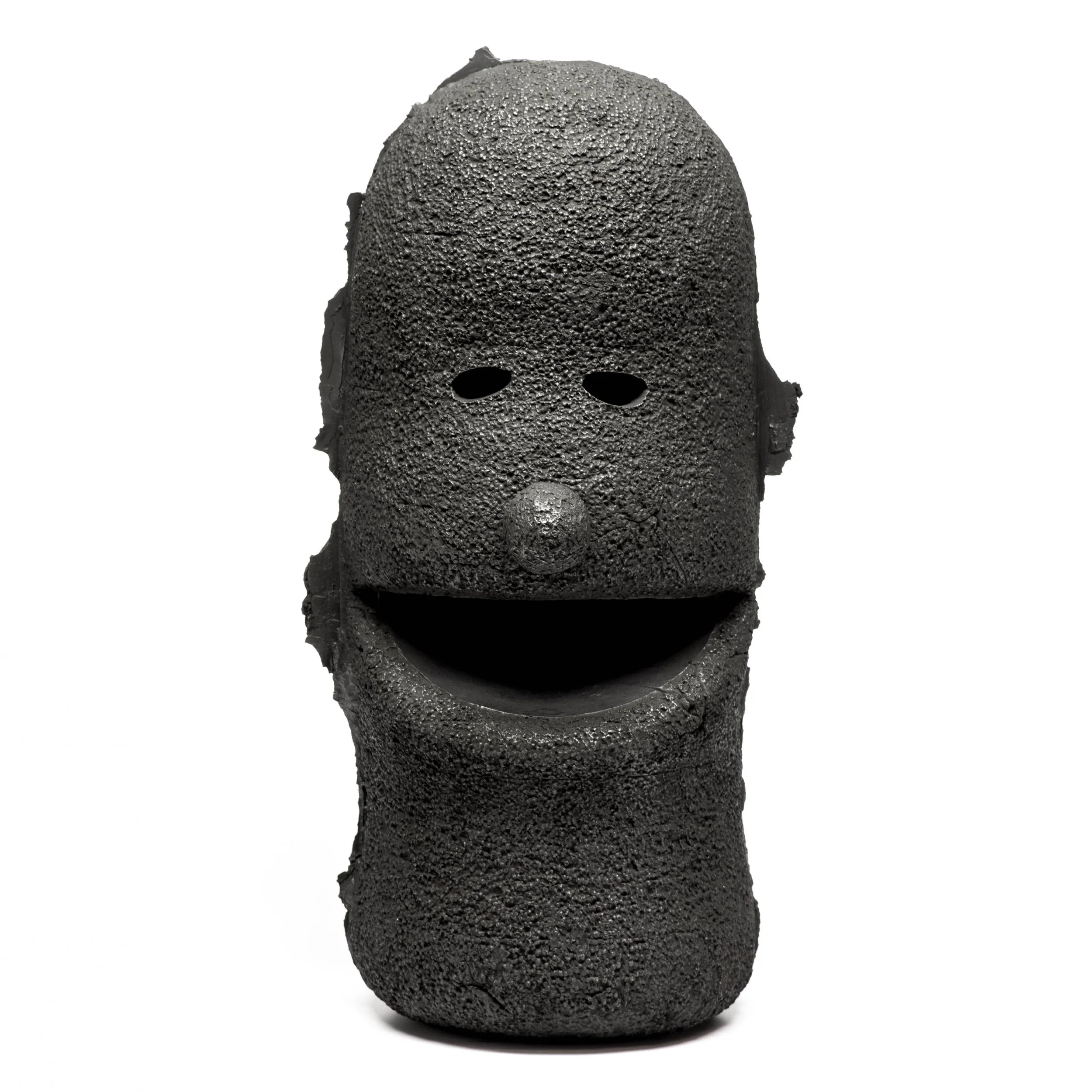
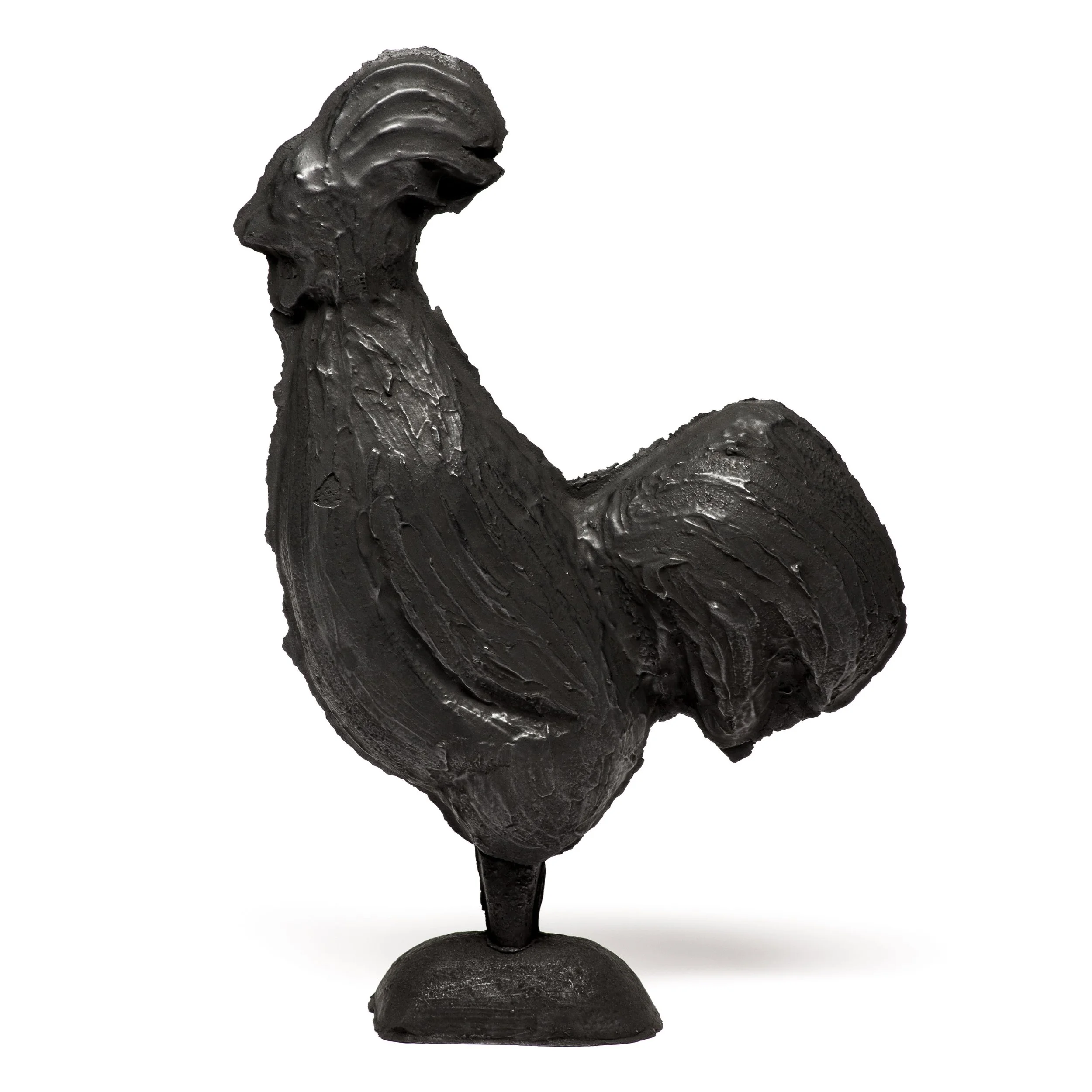
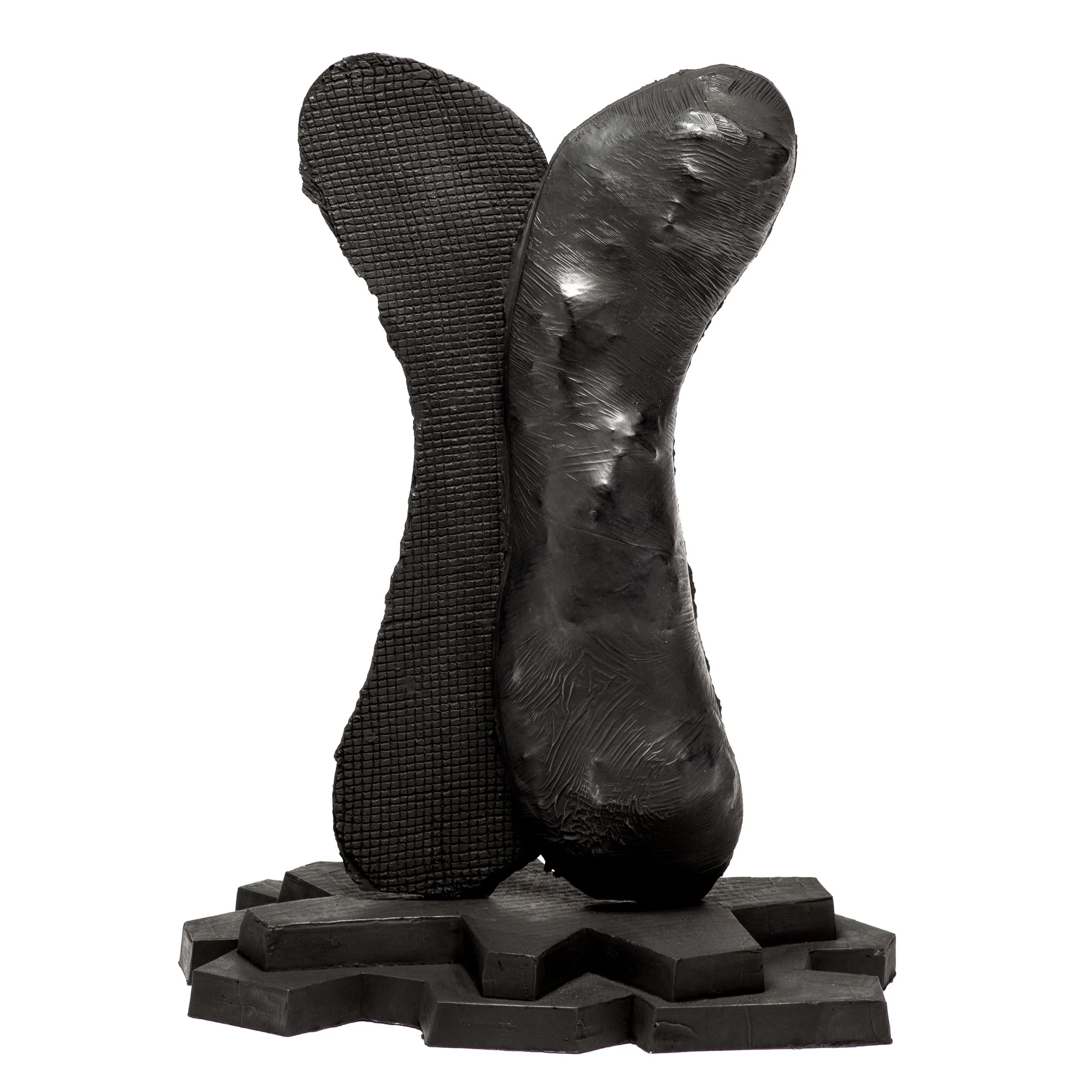
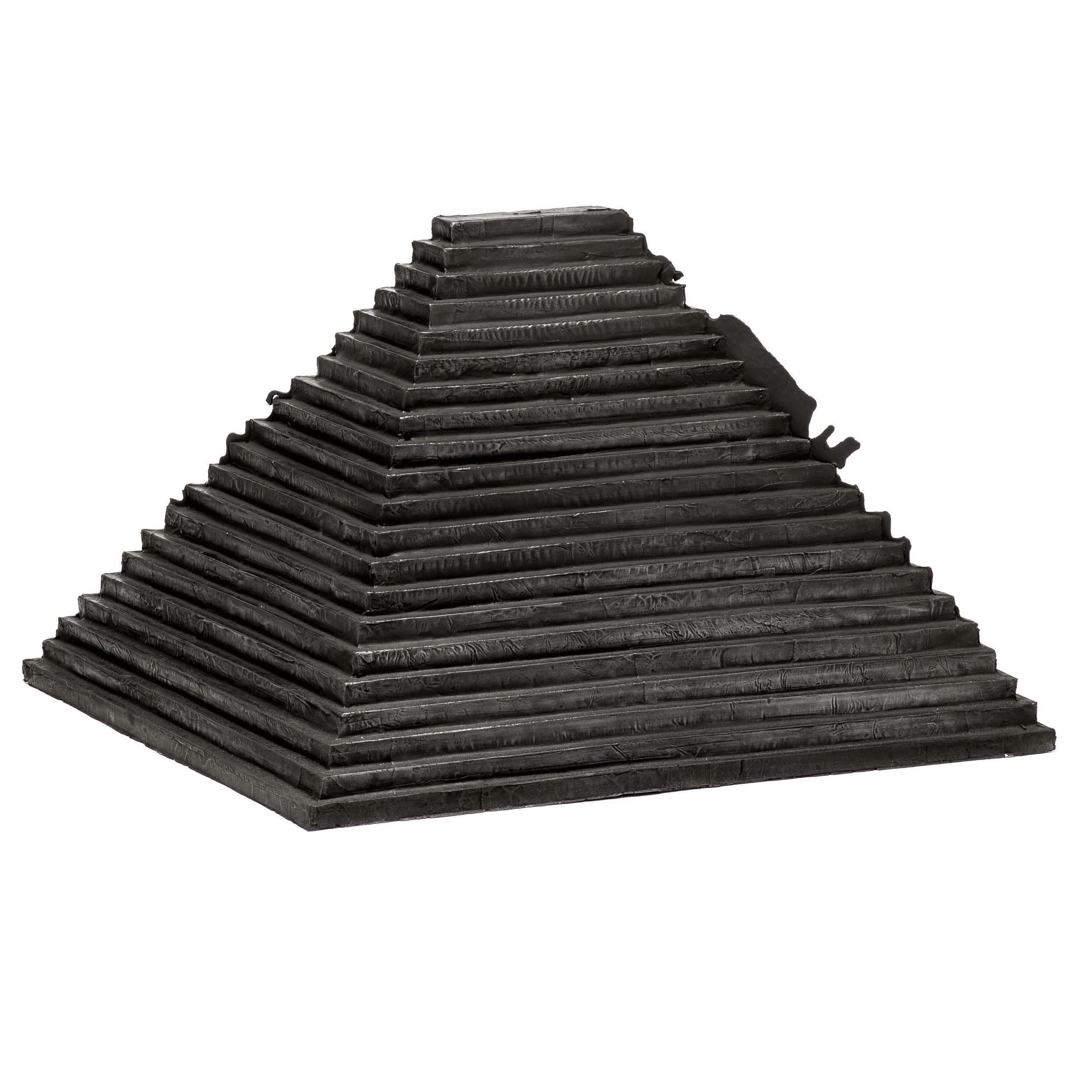
Belger Arts is pleased to present a survey exhibition of works by Mathew McConnell, bringing together a selection of ceramic objects produced over fifteen years of sustained inquiry into creative appropriation and artistic influence. Spanning the years 2010 to 2025, this exhibition unites pieces from multiple bodies of work that share the usage of dark (often charcoal-black), light-absorbing surfaces.
The exhibition includes works from significant moments in McConnell's career: early raku-fired pieces produced while living in New Zealand; works from his widely praised installations from the mid-2010s that cemented his signature approach to mold-making and surface development; and recent explorations produced during his 2024 residency at Belger Crane Yard Studios in Kansas City. Despite their varied origins, these works are united by their insistence on a particular aesthetic—the negative, the substitute, the object that both reveals and withholds.
This exhibition is in partnership with Handwork: Celebrating American Craft 2026,* a nationwide Semiquincentennial initiative to showcase the importance of the handmade
throughout our history and in contemporary life.
*Belger Arts is proud to participate in Handwork 2026, a year-long initiative that includes over 250 museums, art centers, organizations, educators, and makers to celebrate the diversity of the crafts that define America, bringing compelling stories and underrepresented art and artists into the spotlight. As a member of the initiative, Belger Arts is celebrating handwork through a variety of programs that provide visitors a chance to discover and experience craft.
These programs include the following exhibitions:
February 6 - May 2, 2026 - Second Skin: Exploring Adornment as an Extension of Self
February 6 - May 2, 2026 - Mathew McConnell: These Things Take Time
October 2, 2026 - January 2, 2027 - Victor Babu
Bodies of Work included in the exhibition
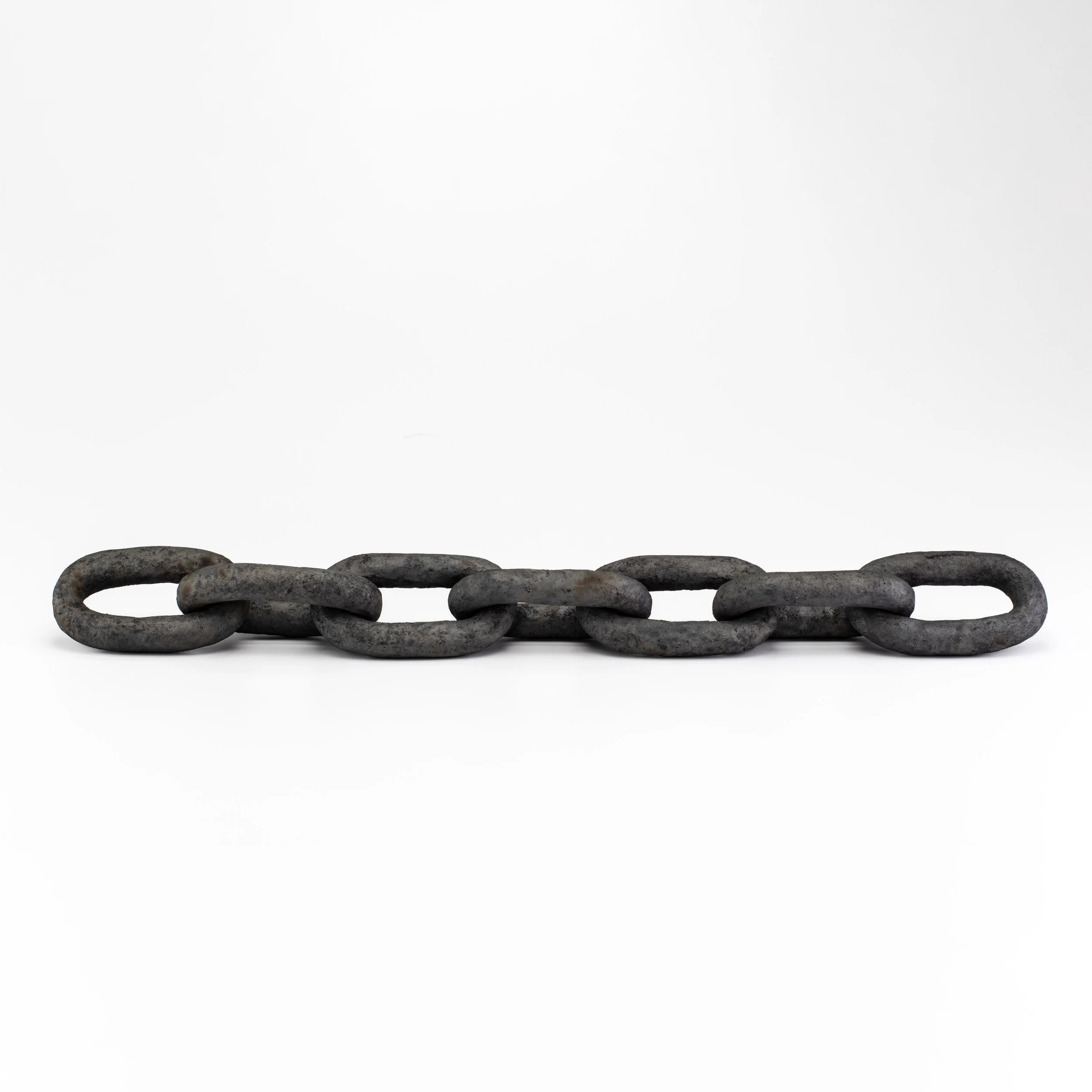
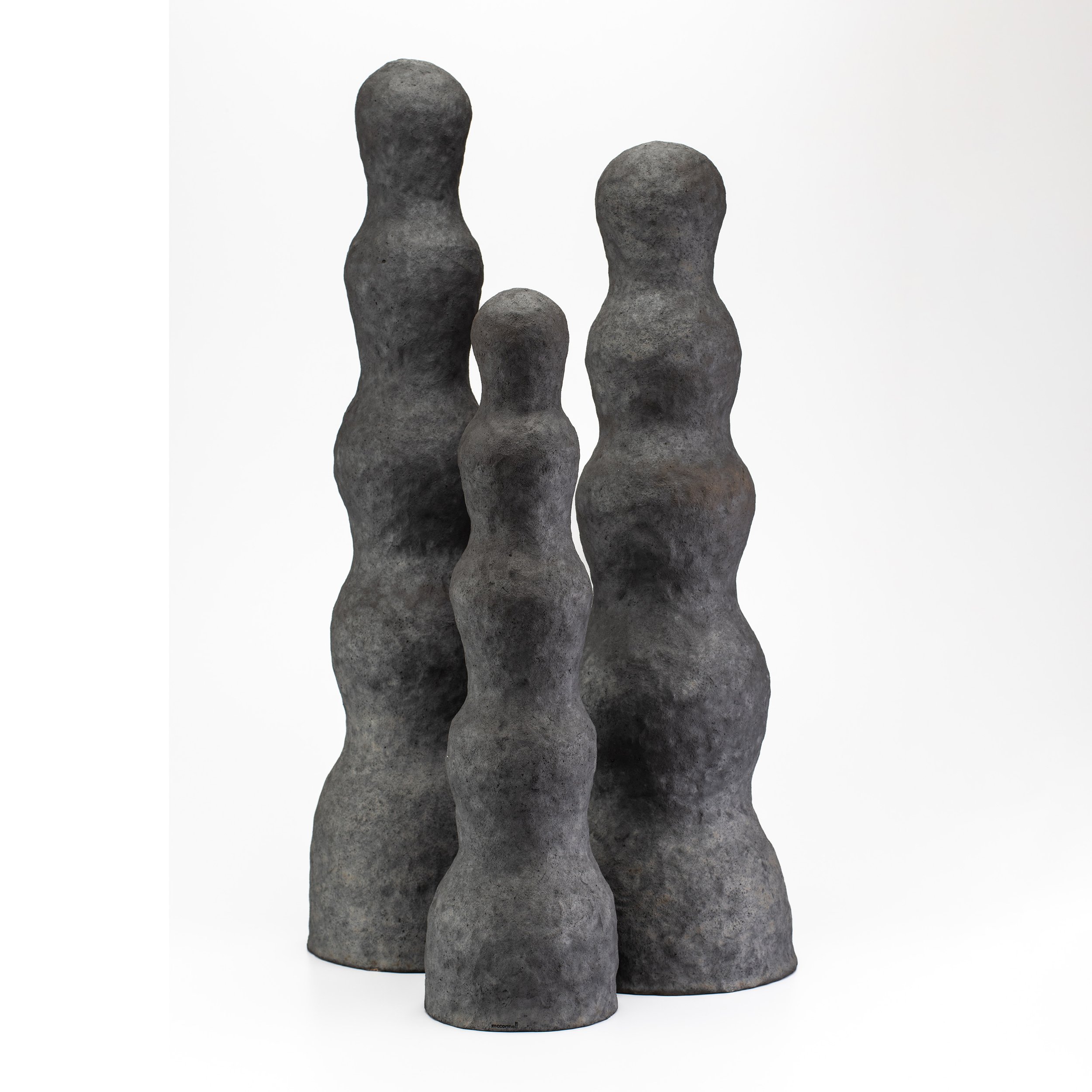
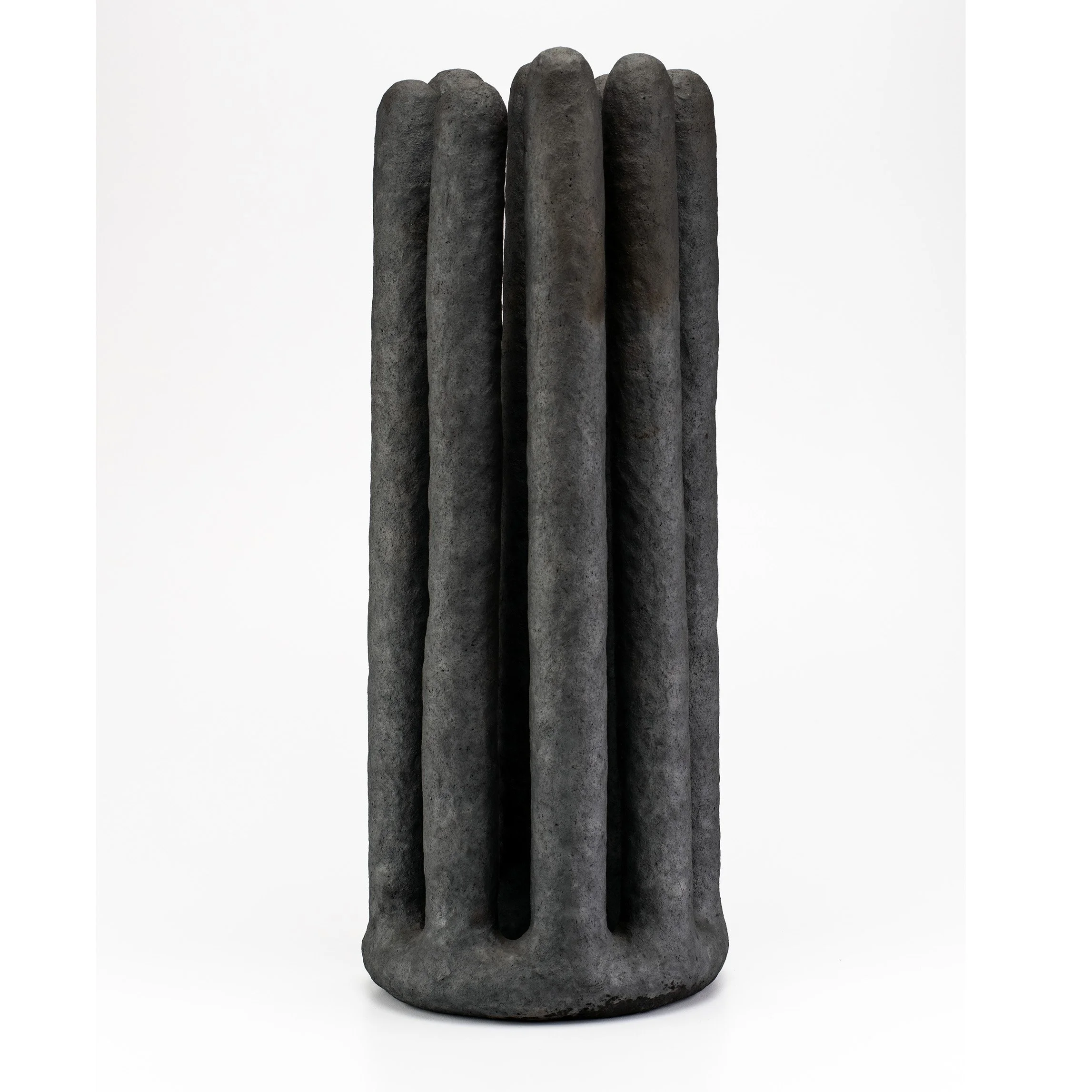
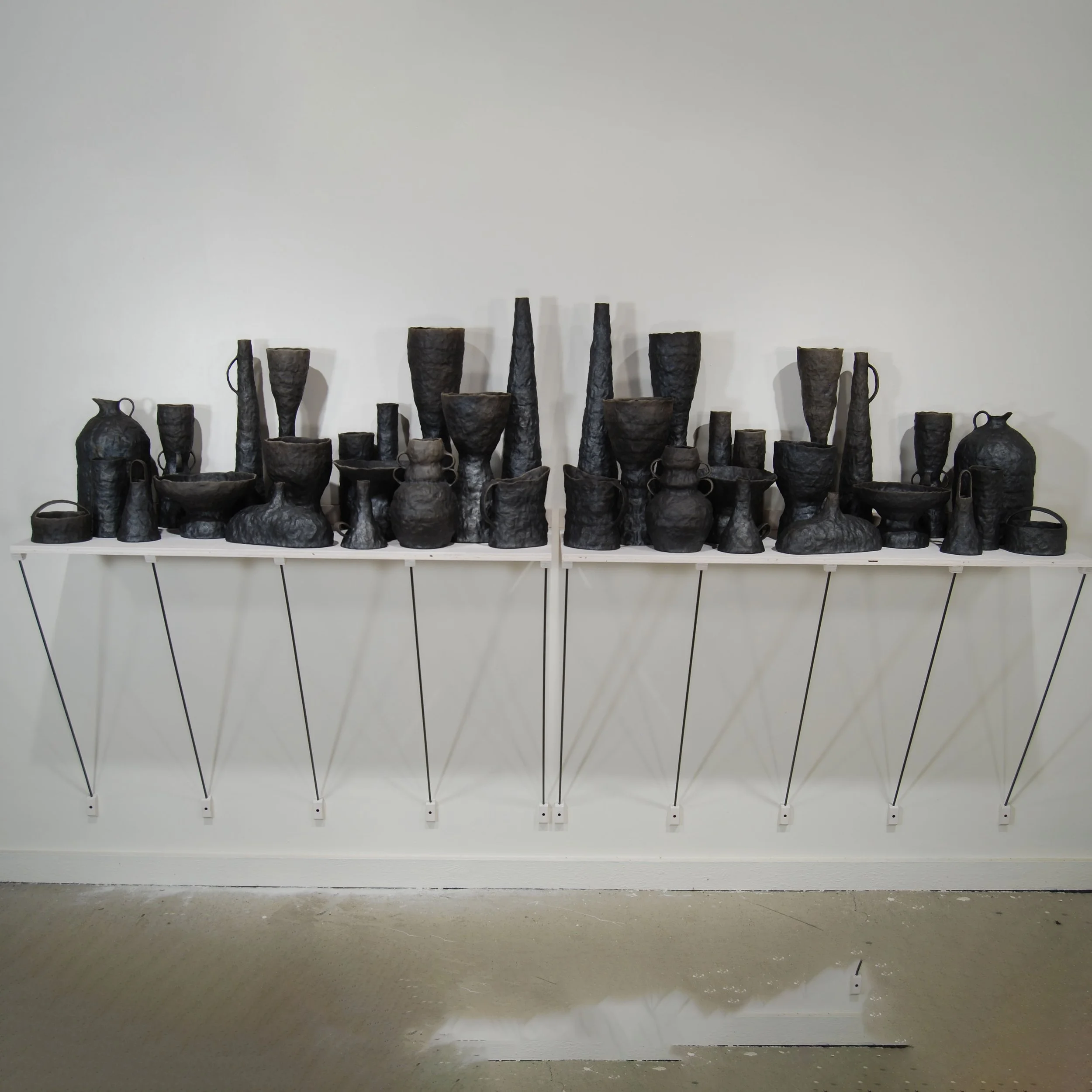
Many Things New and More of The Same (2010)
Created during McConnell's year working in New Zealand, Many Things New and More of The Same represents a deliberate reduction of means. Stripping away color and limiting himself to a single material—clay, fired once, with an unglazed raku surface—McConnell imposed one further constraint: no tools of any kind, only his hands and the table before him. In the resulting fingerprints and subtle patterns impressed into clay, the work captures something elemental about translation—a plaintive record of information passing from one state to another, with the translator pressed unquestionably into every surface
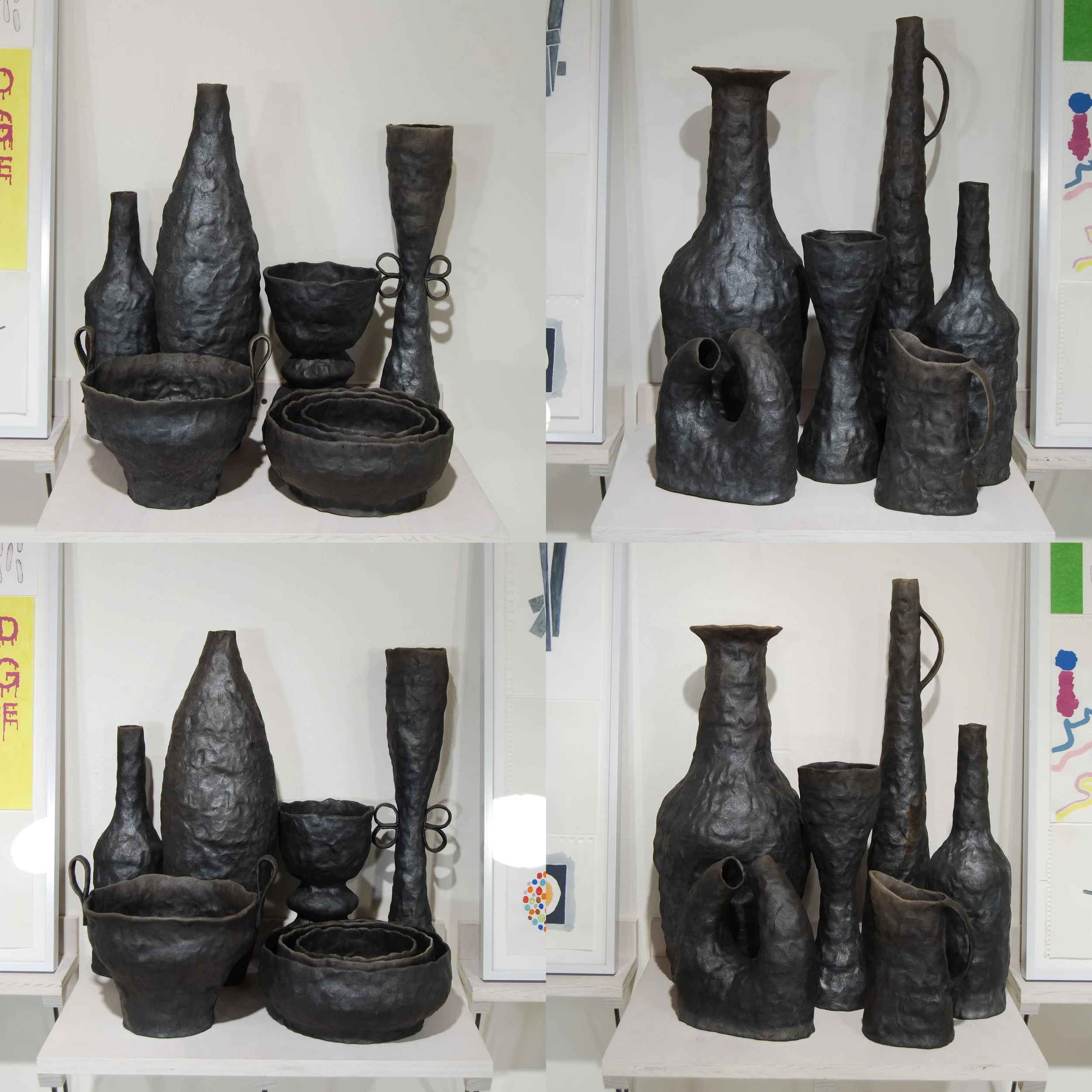
Between One and The Same (2010)
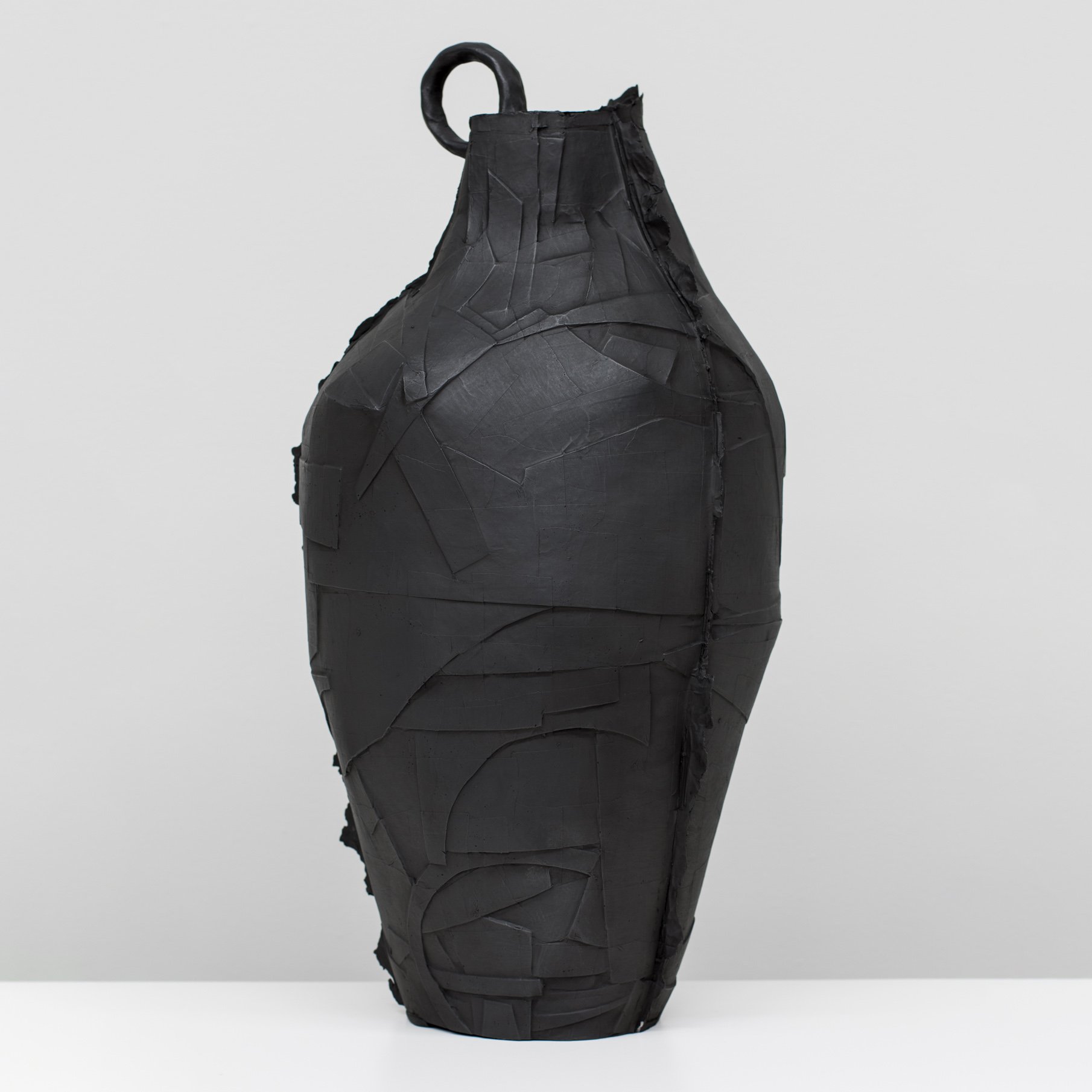
Produced during McConnell's residency at the Archie Bray Foundation, Between One and The Same turns the practice of duplication inward. Each work began as a memory of a contemporary vessel, then was set aside and remade again—duplicates of duplicates. The process sustains a tone of studied indifference, deliberately detached from expectations of improvement or resolution. McConnell was testing whether something might be revealed in the space between one iteration and the next: a more knowing, more conscious articulation of self, observable only through repetition.
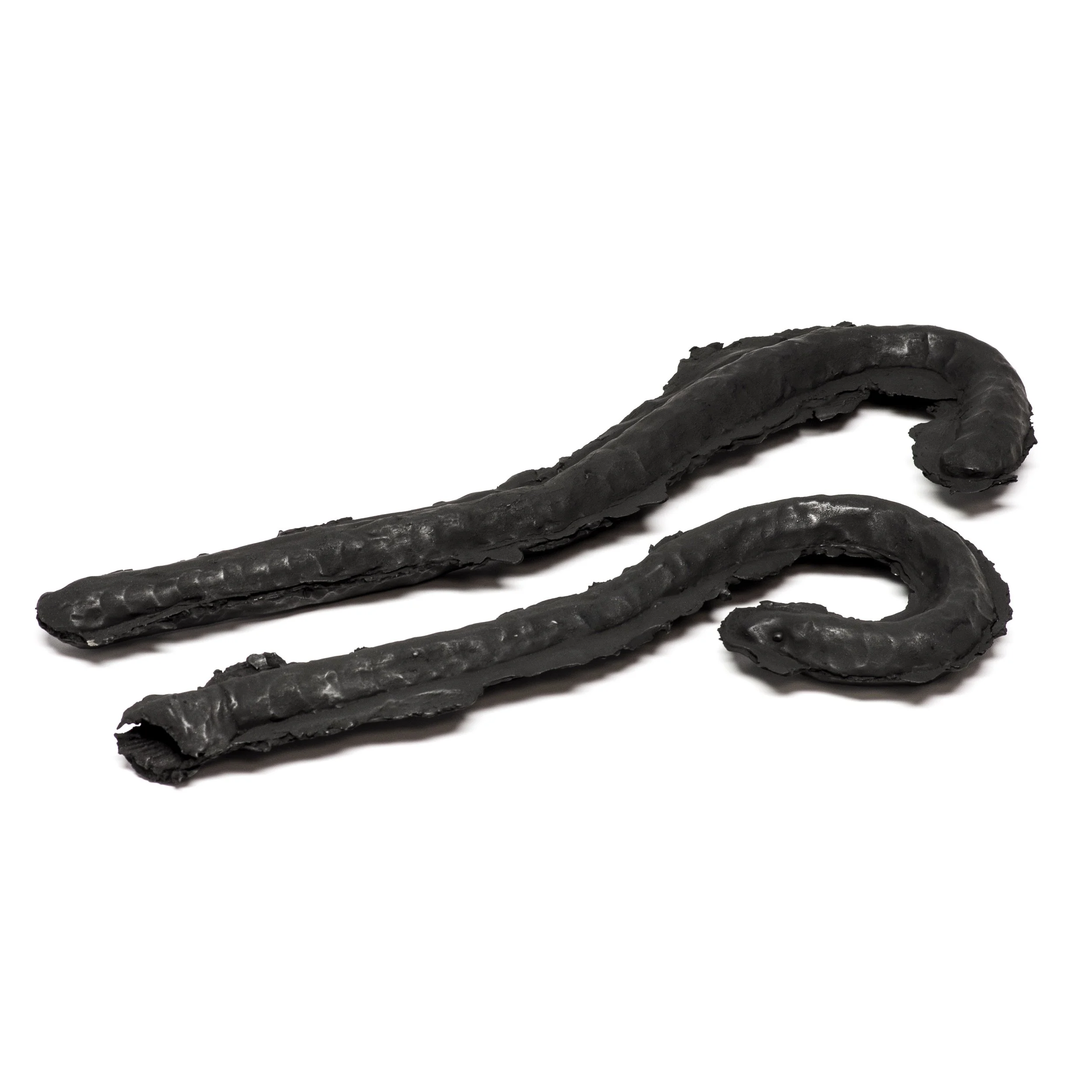
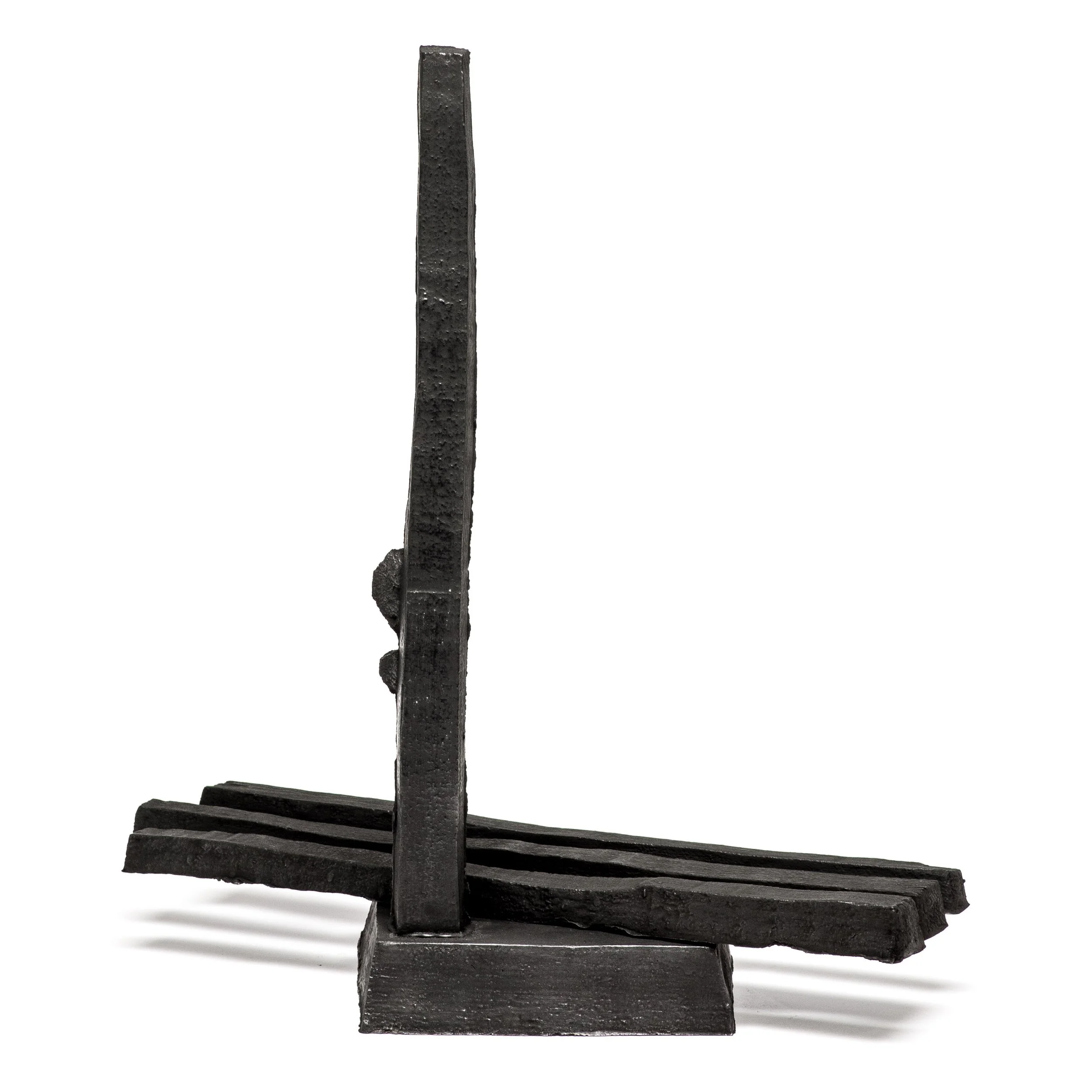
What it Means to Move (2013)
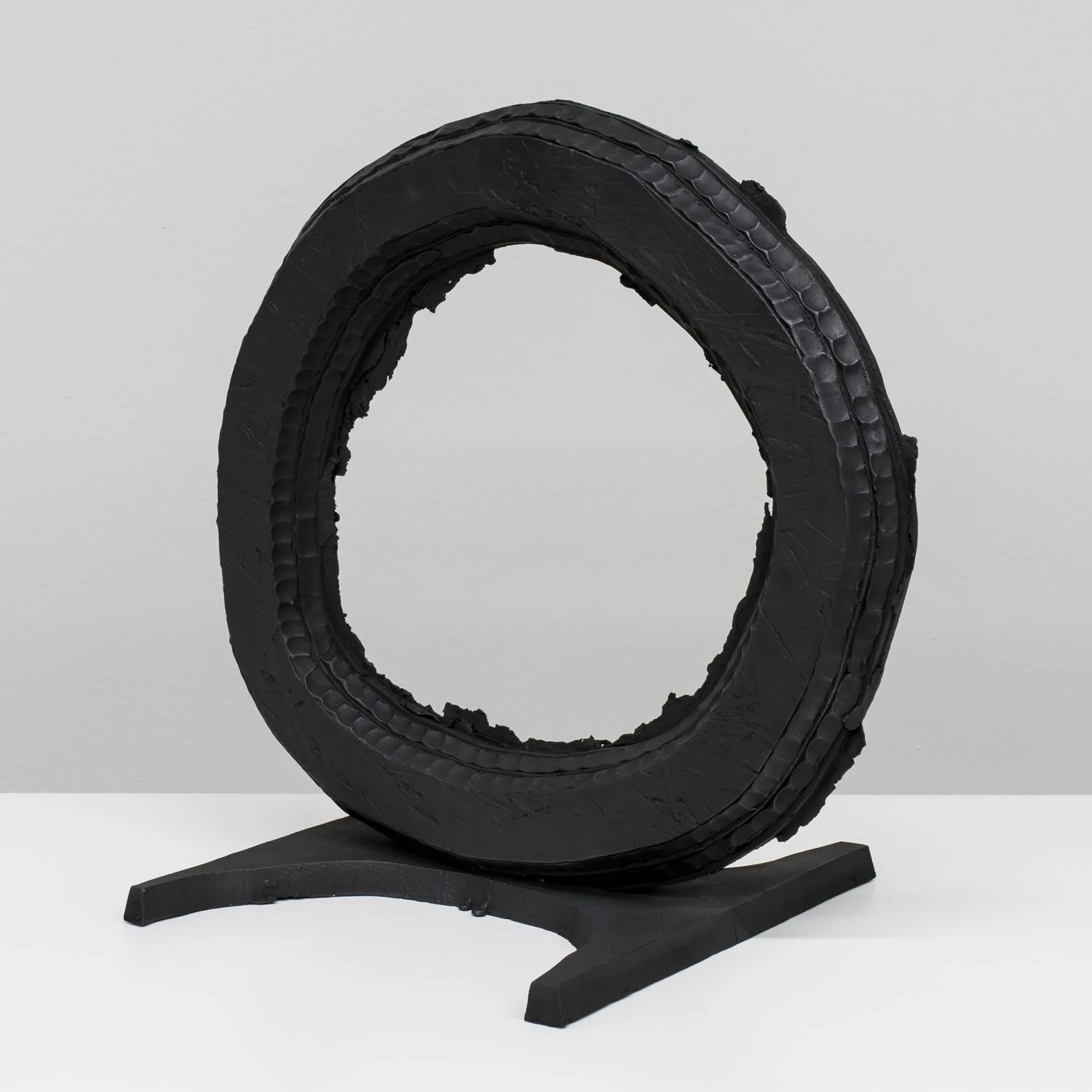
What it Means to Move enacts a process of distillation. Beginning with simple line drawings of source artworks, McConnell drew and redrew, discarding prior iterations, working steadily away from recognizable reference until only simplified icons remained. These distilled forms became plans for sculptures produced through swift, mold-based processes—quick models, quick plaster molds, quickly cast objects—finished with bone charcoal surfaces. The firing provides an emphatic halt: a calculated contradiction. The work embodies movement through information while remaining completely static, fixing the passage through influence into singular, irreversible form.
More Possibilities for Distance and Mass (2016)
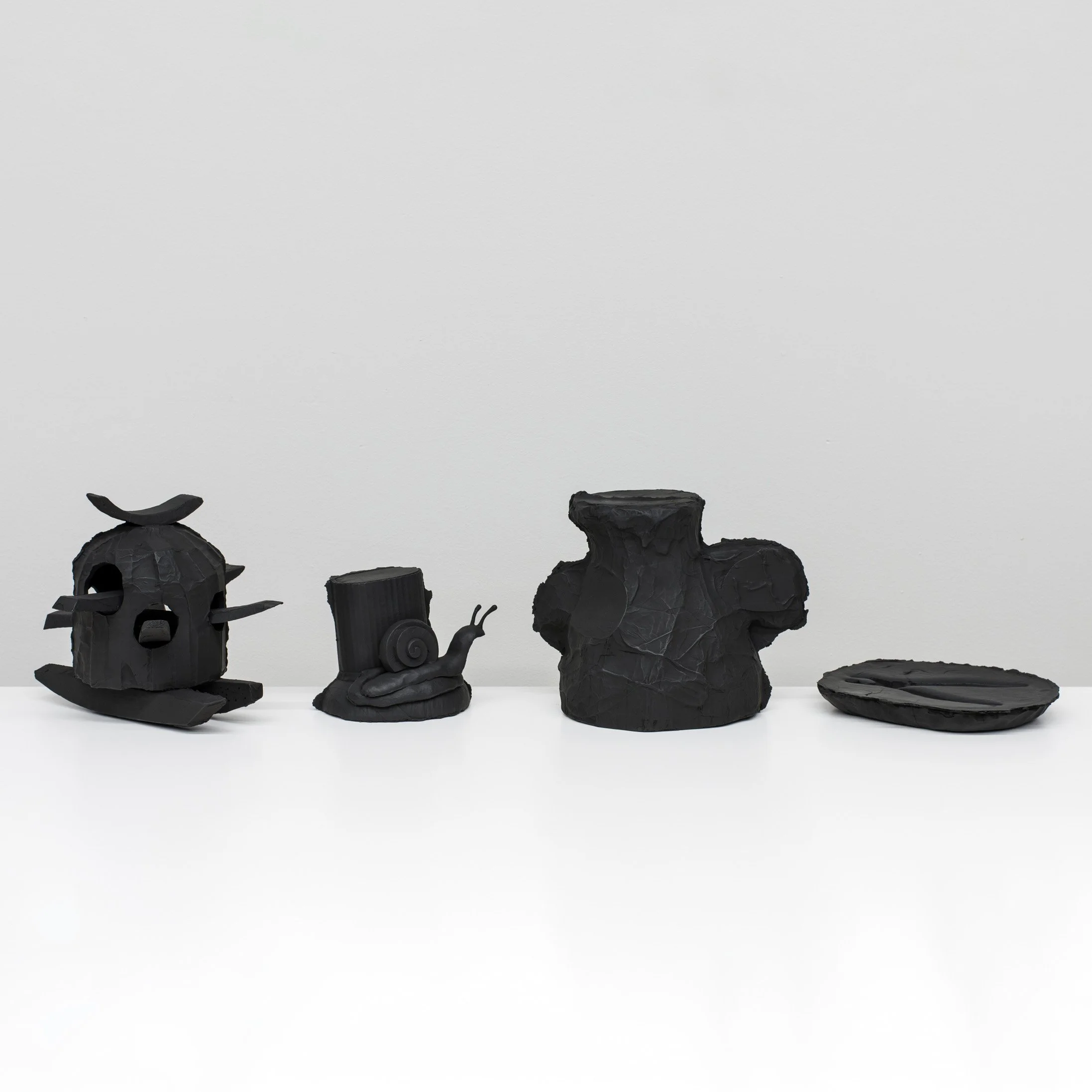
For More Possibilities for Distance and Mass, McConnell printed hundreds of source images and spread them across his work table, creating an immediate and unavoidable field of formal possibilities. Each sculpture emerged from this accumulation, the artist reaching into the images as he worked. The results feel genuinely collaborative—belonging simultaneously to their sources and to McConnell's hand. The work also investigates how the mold itself provides voice, its imperfections valued in the way we value the irregular in pottery. It poses a quiet question: what do we take, and what do we give in return?
February, February (2018)
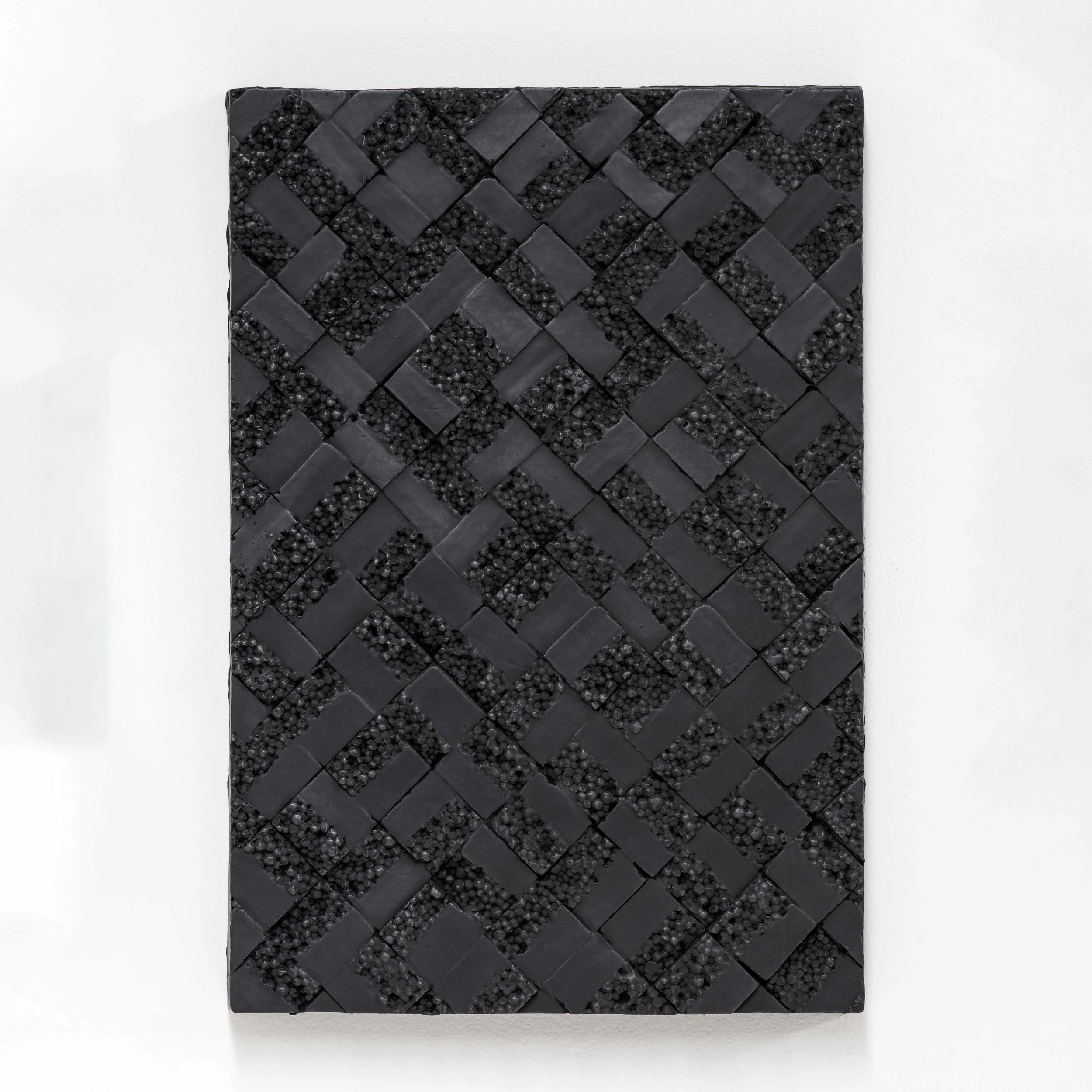
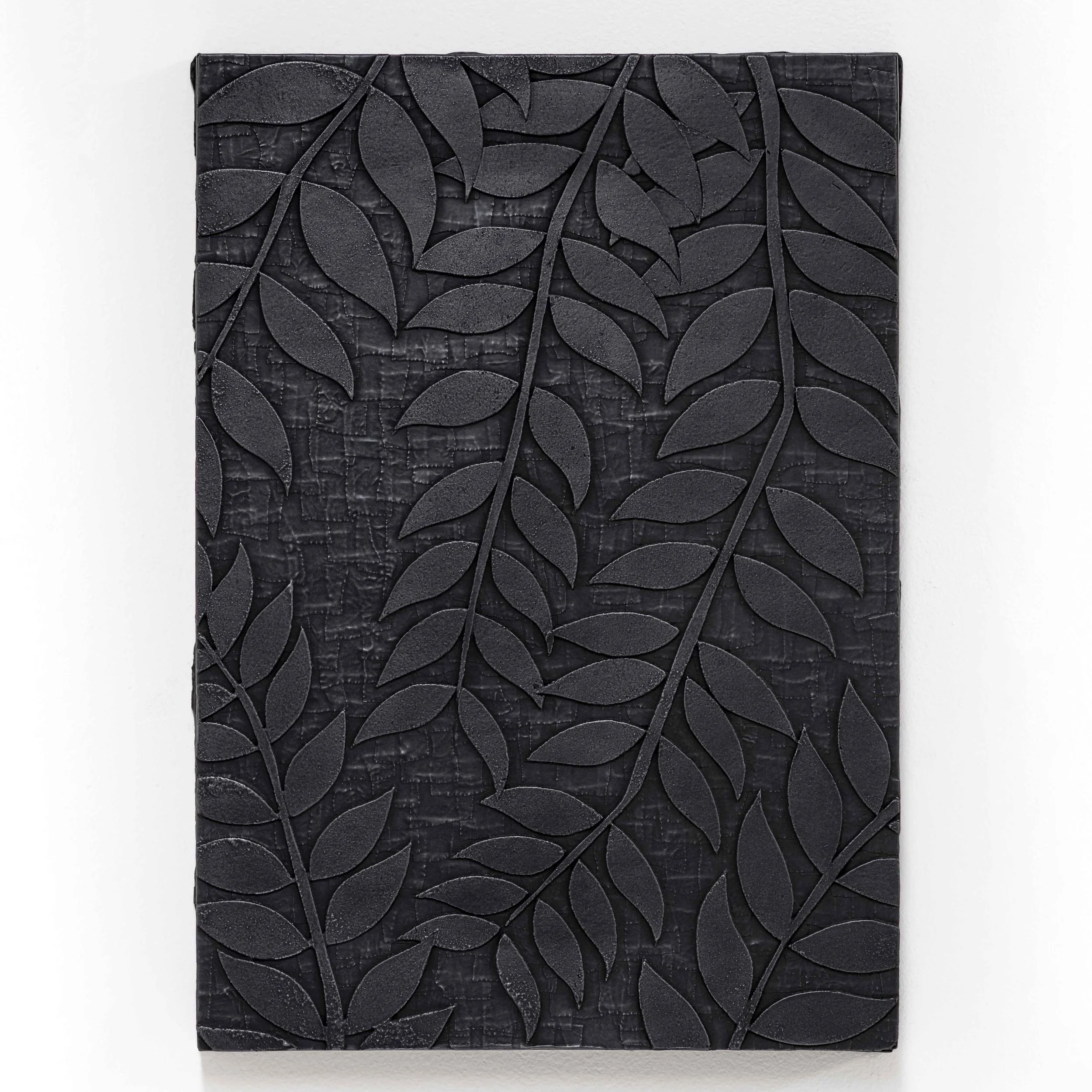
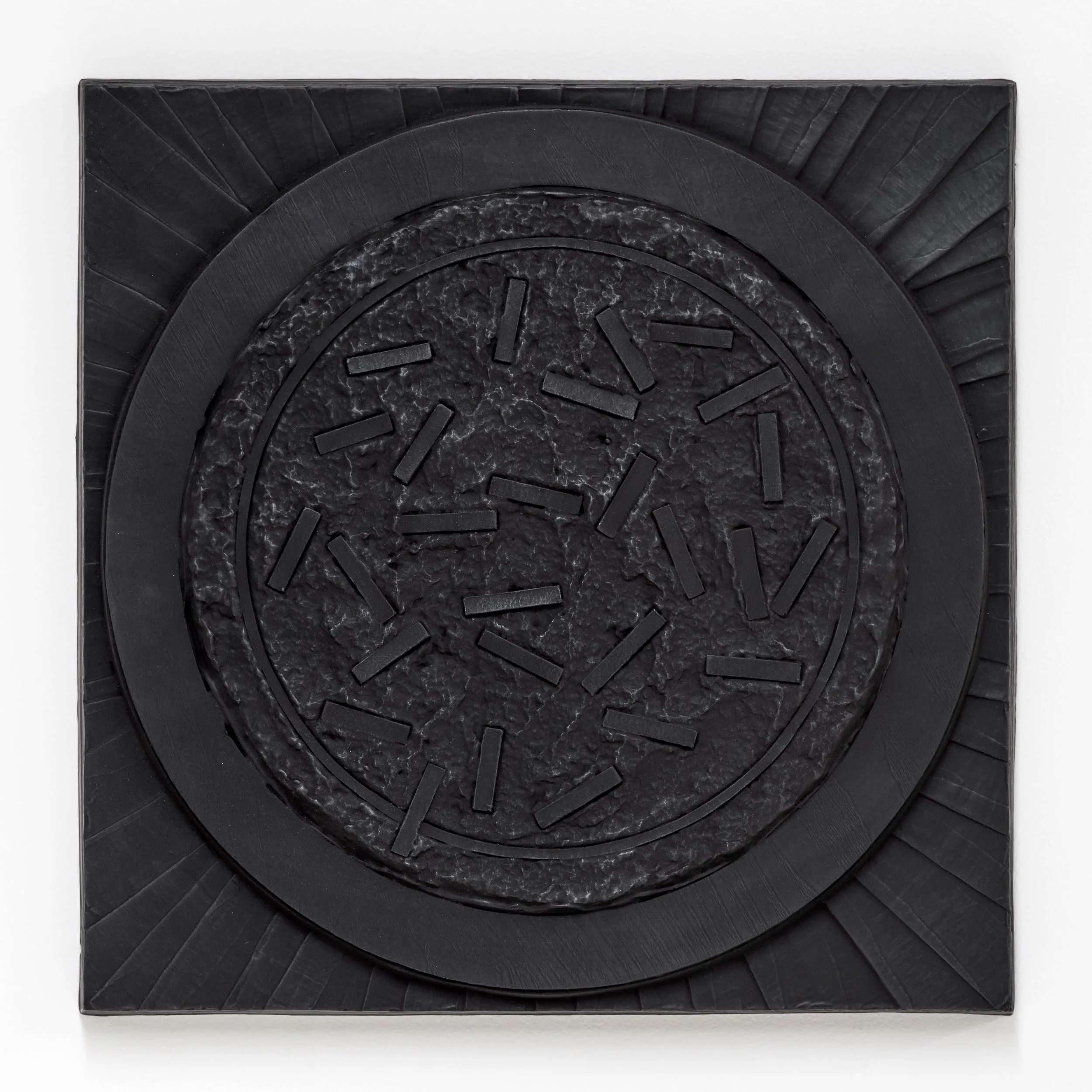
In its initial presentation, February, February comprised two nearly identical sets of twenty-eight earthenware tiles finished with bone charcoal and graphite. Production followed a strict temporal parameter: McConnell collected hundreds of images from exhibitions occurring worldwide during a single February, downloading from sites such as Contemporary Art Daily and Art Viewer. From these, models were quickly and intuitively resolved in cardboard, tape, foam, and fabric. Installed, the tiles' light-absorbing surfaces appear as voids from a distance; approaching reveals finely reproduced details. One set of 28 was signed, the other unsigned—multiplying questions of authorship and origin.
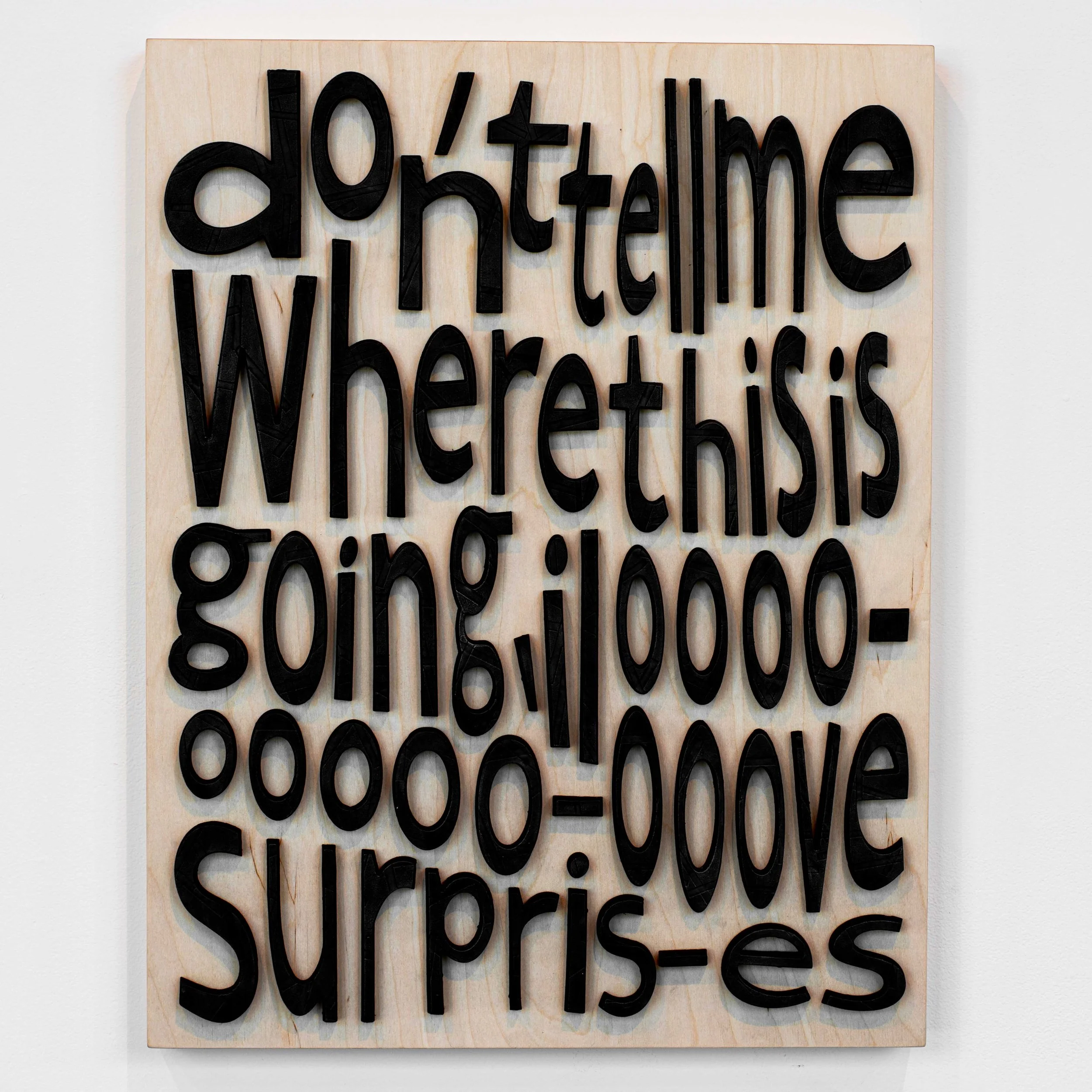
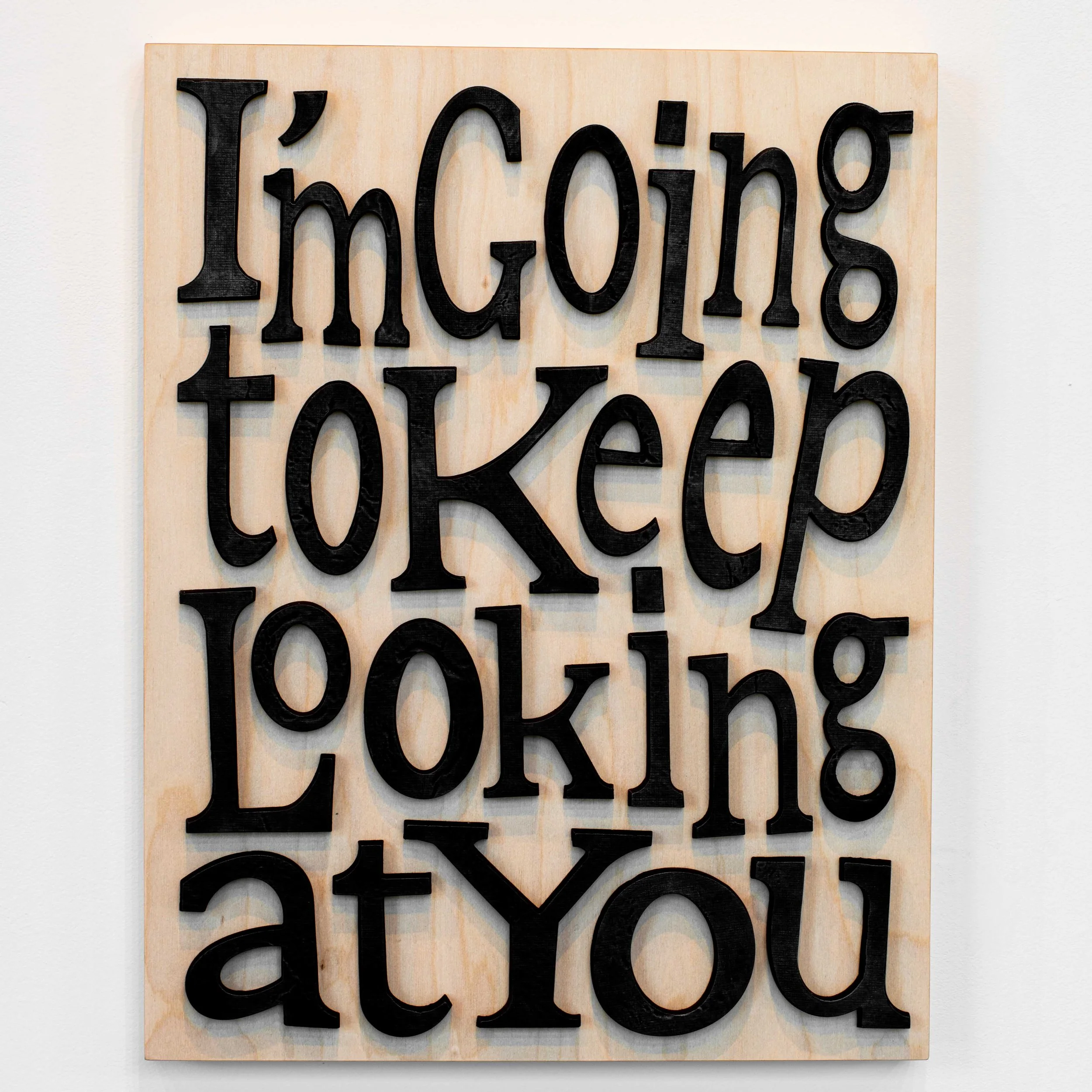
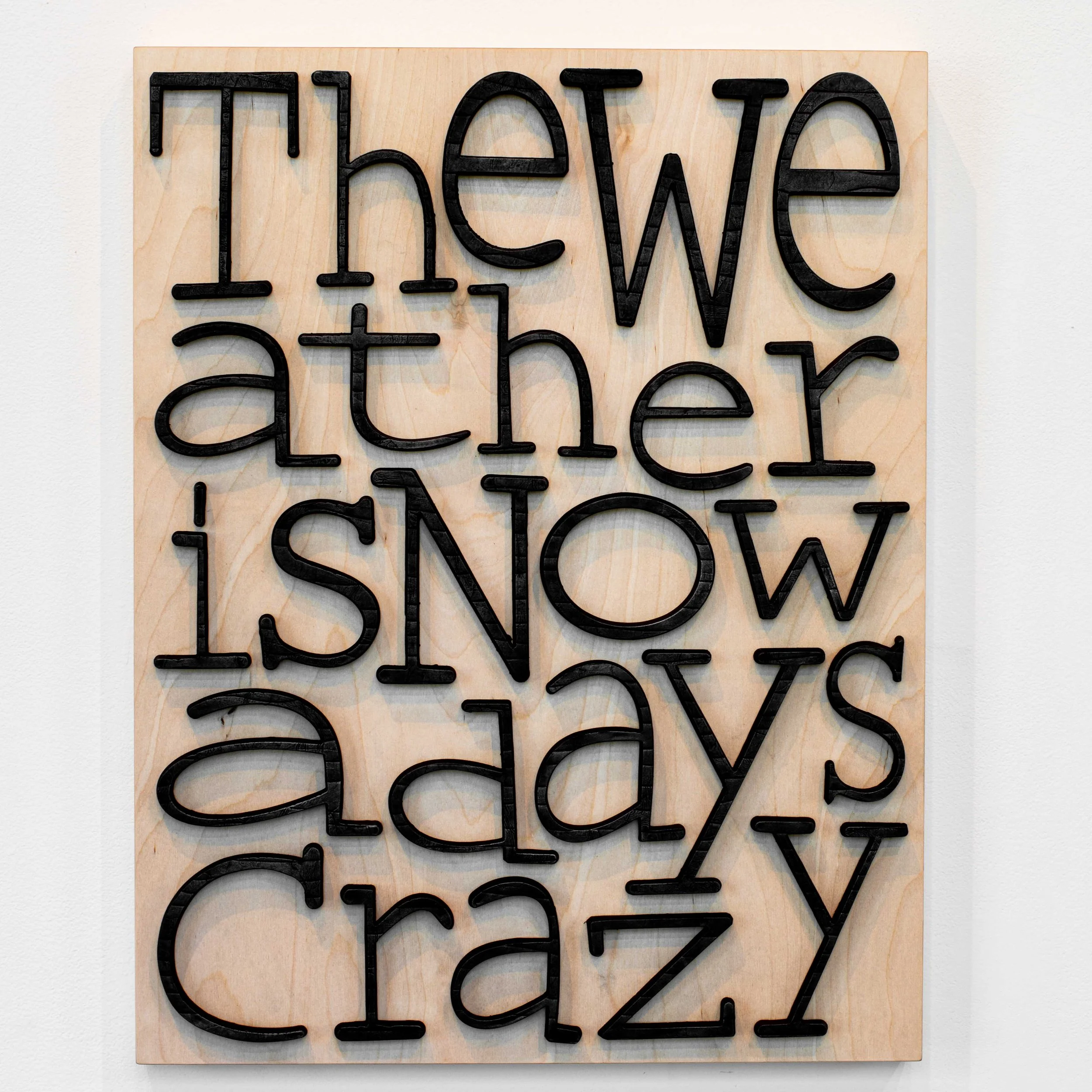
Words Without Work (2022–23)
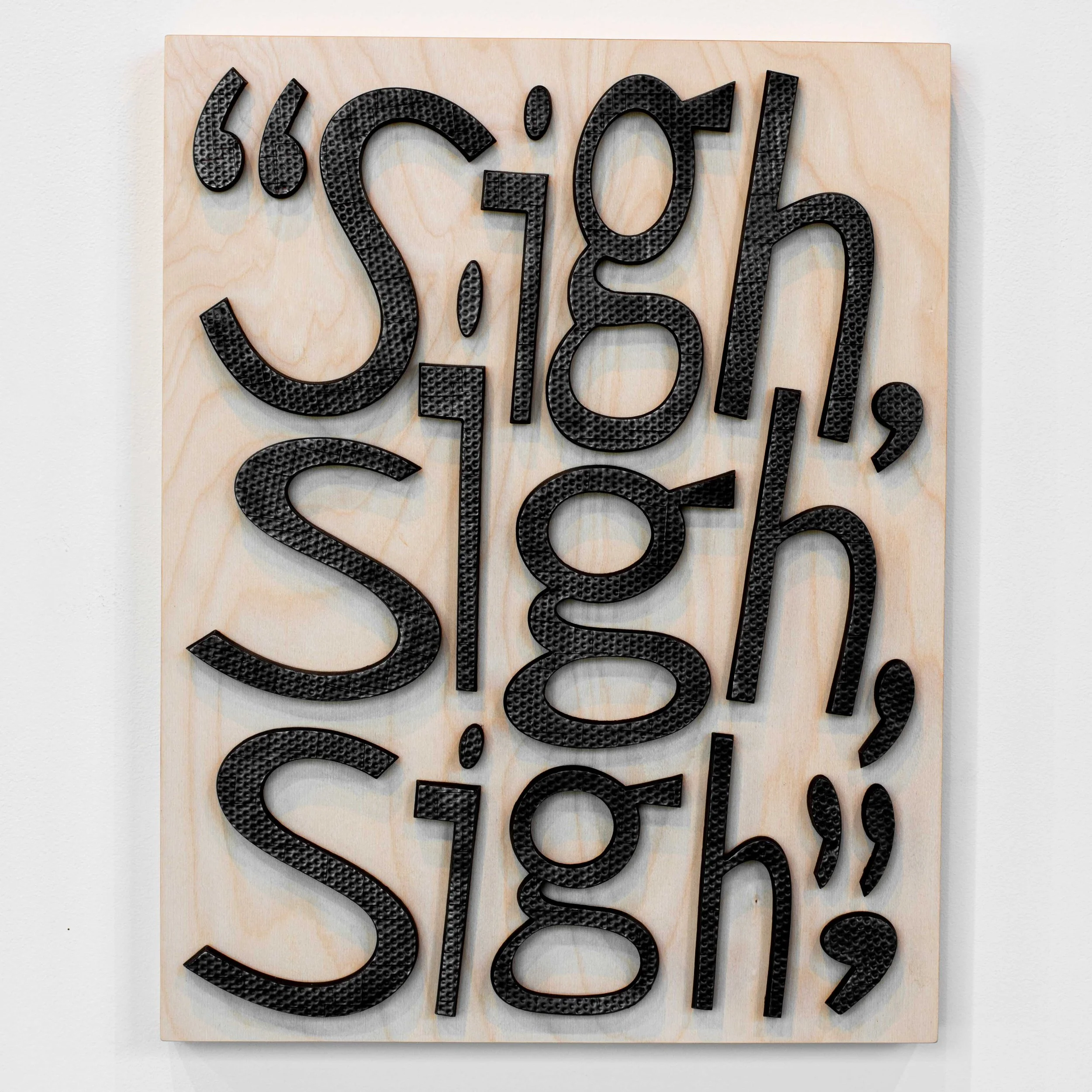
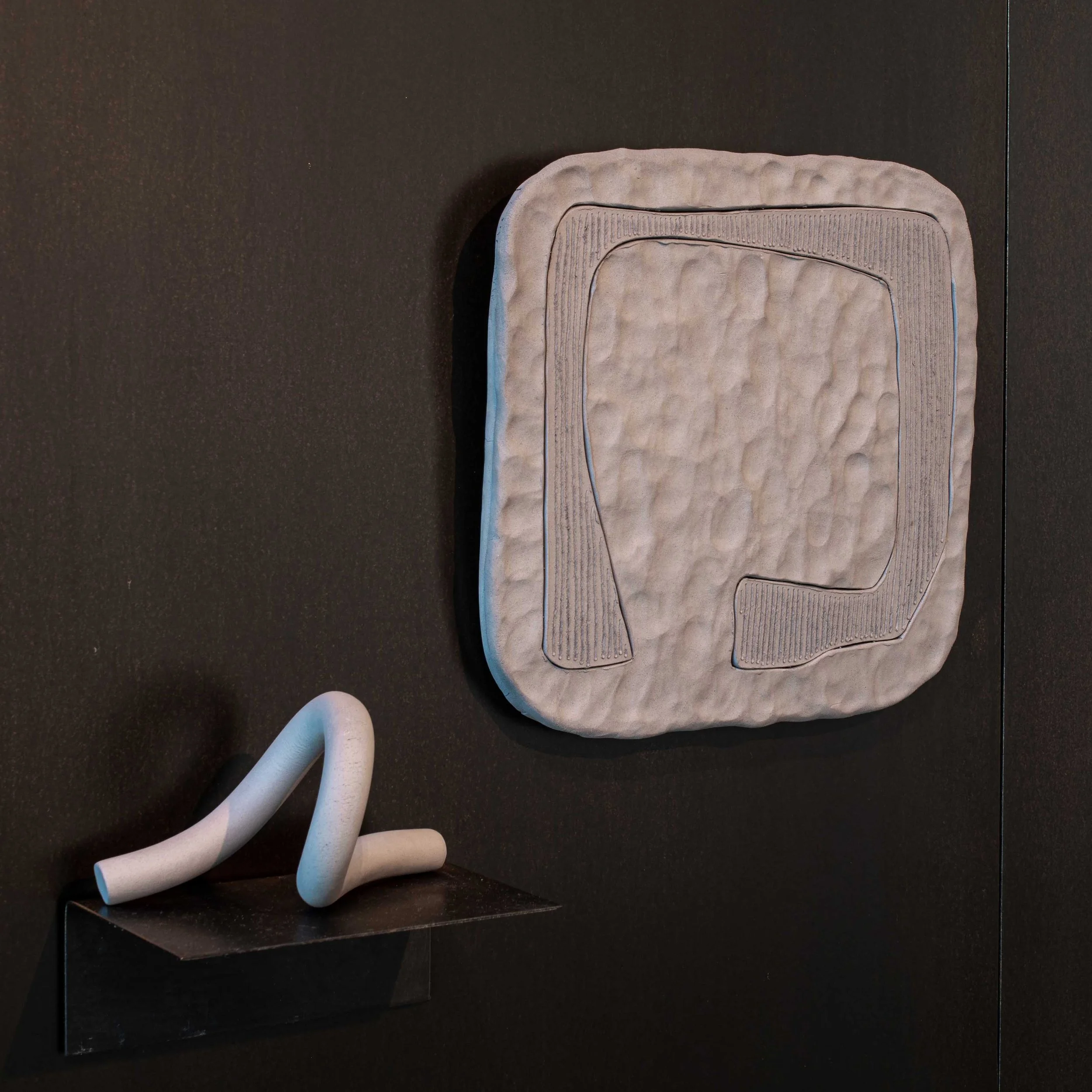
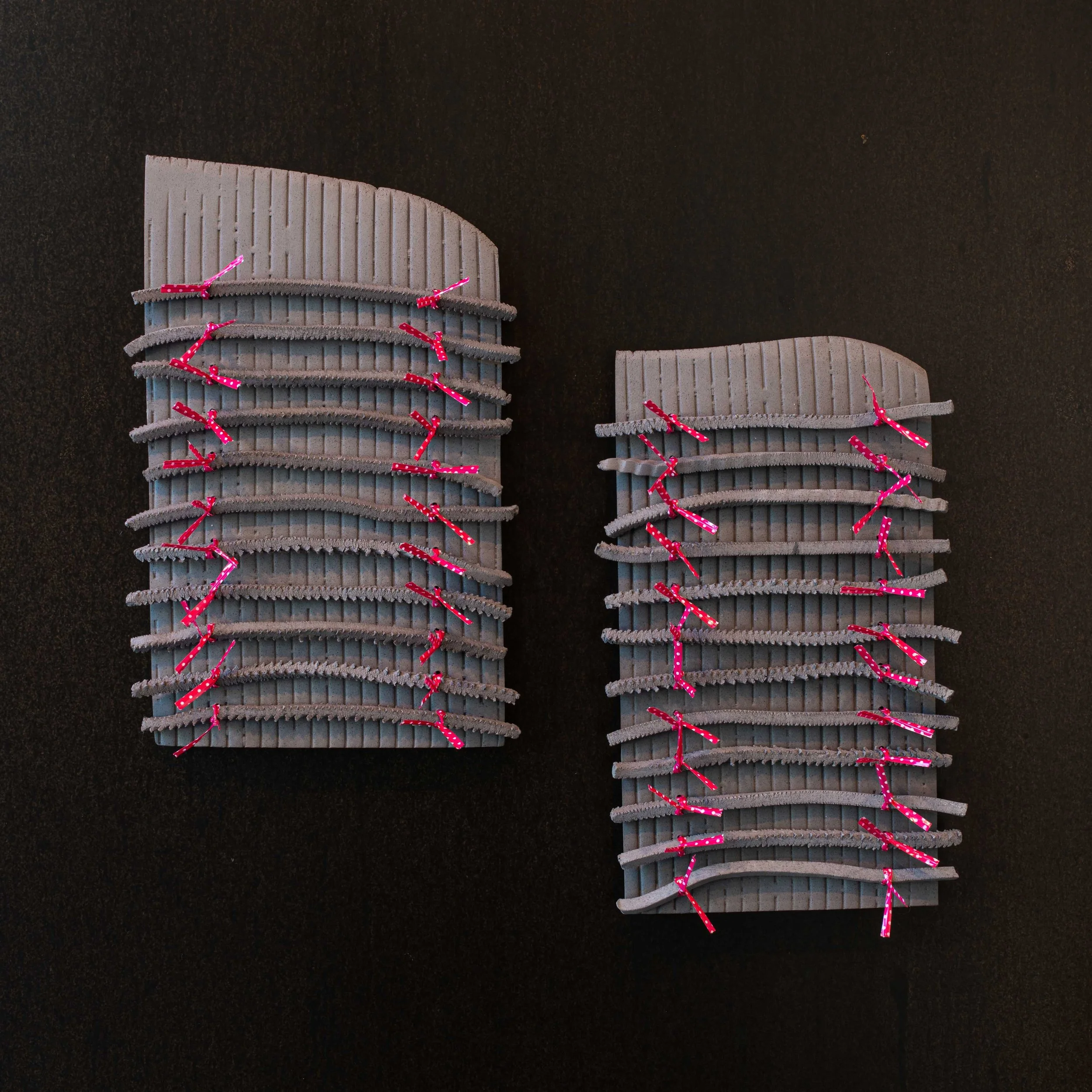
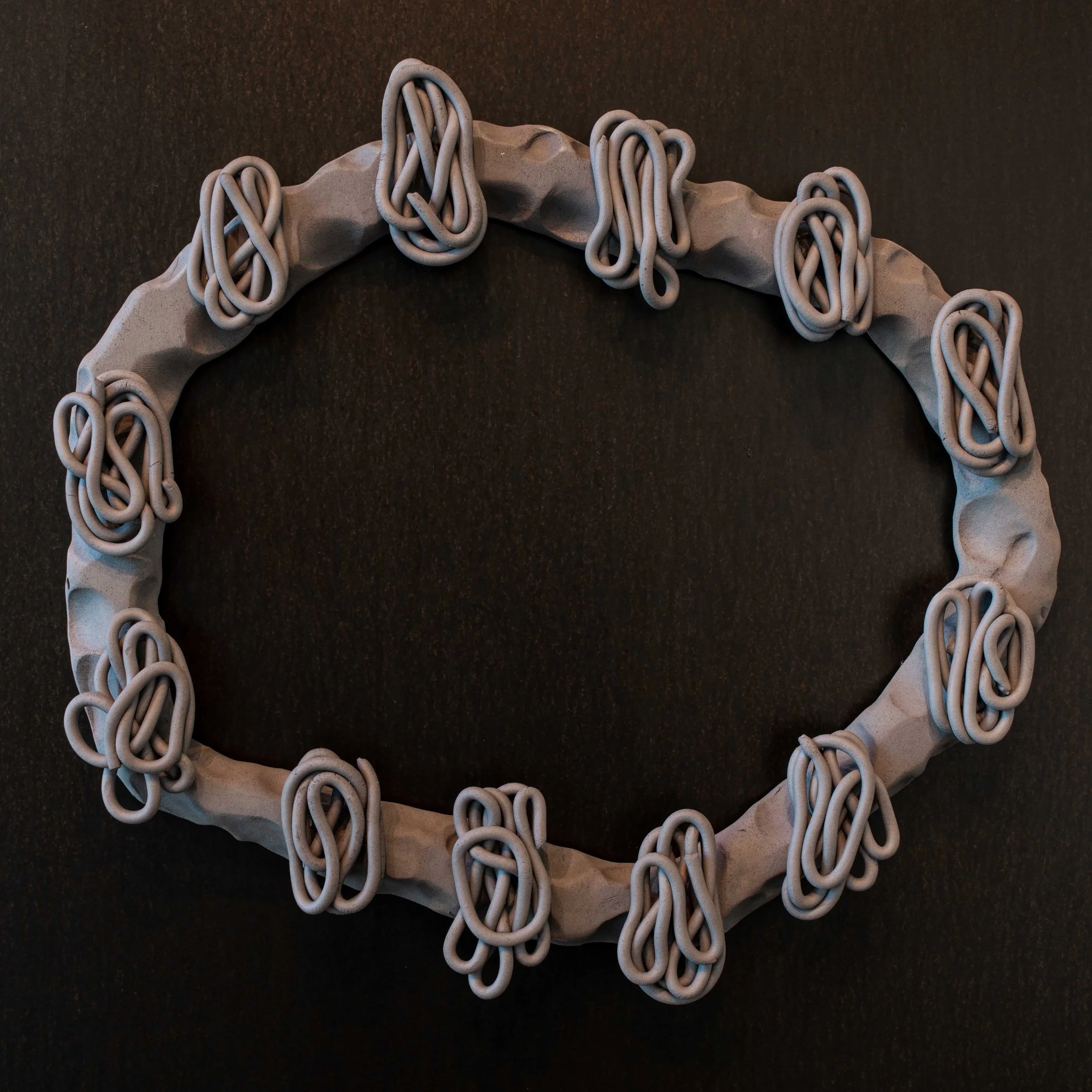
Words Without Work begins with language—specifically, the titles of other artists' exhibitions. McConnell searched scores of show titles, selecting those that resonated, then hand-drew each one in a basic serif font: direct, self-conscious, unmistakably hand-rendered. The drawings were scanned, translated into 3D digital models, and ultimately CNC machined. The project isolates the only aspect of an exhibition that possesses no physical form—its title —and gives it distinct, singular materiality. Stripped from the work it was meant to accompany, the language becomes object, occupying space with the weight and presence the original words only gestured toward.
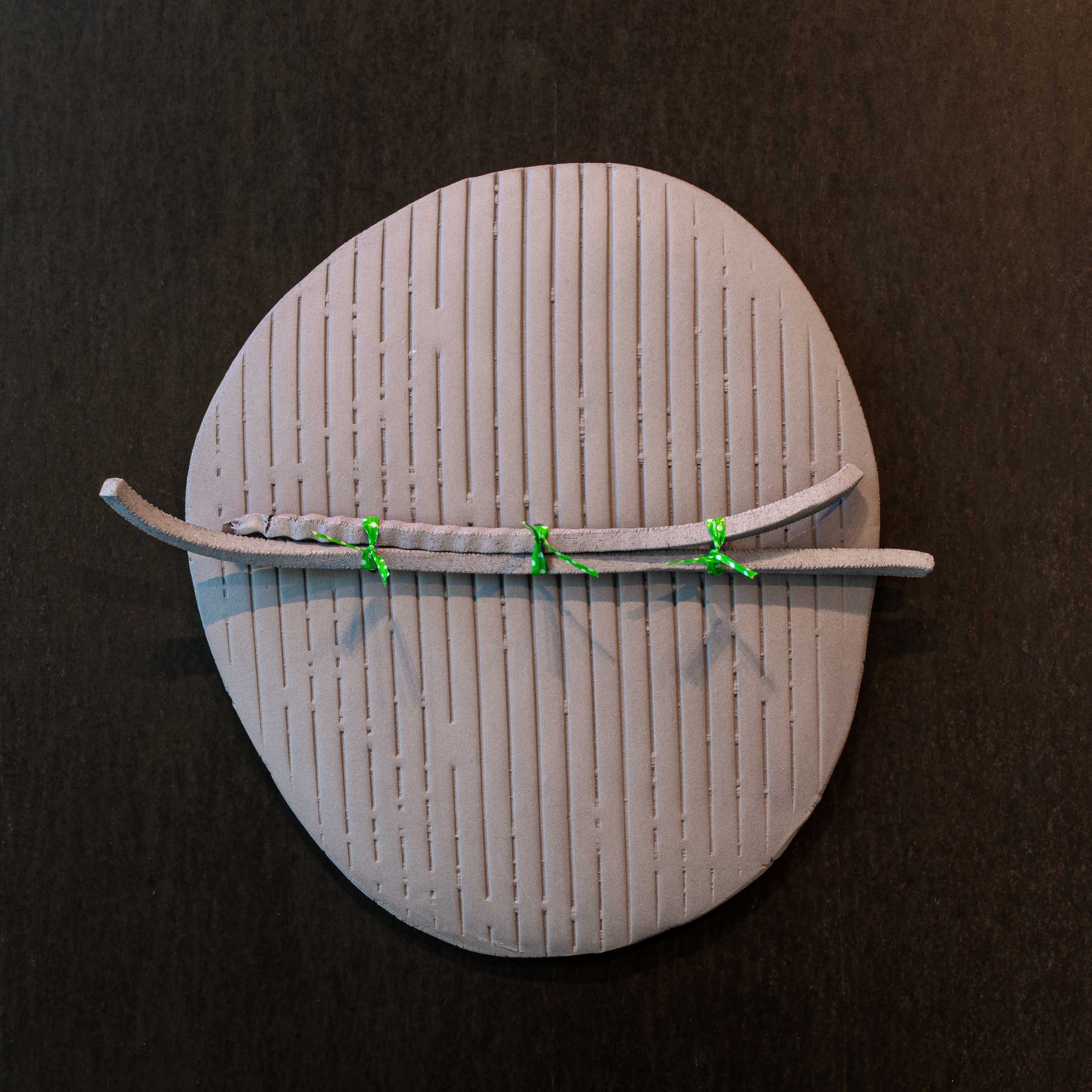
Didn't Miss a Thing (2023)
Produced during a residency at CRETA Rome, Didn't Miss a Thing is shaped by the constraints of place: available materials, limited scale, the pressures of time, and the dense visual culture of the city itself. Each component originates in a specific contemporary artwork but is refracted through McConnell's immediate circumstances—a line or shape taken and worked through iterations until exhausted. The resulting assembly functions as an archive: a physical record of time, place, and influence held together in cohesive dialogue. It questions how authentic response emerges when borrowed forms become vehicles for processing lived experience.
Closer Still (2024–25)
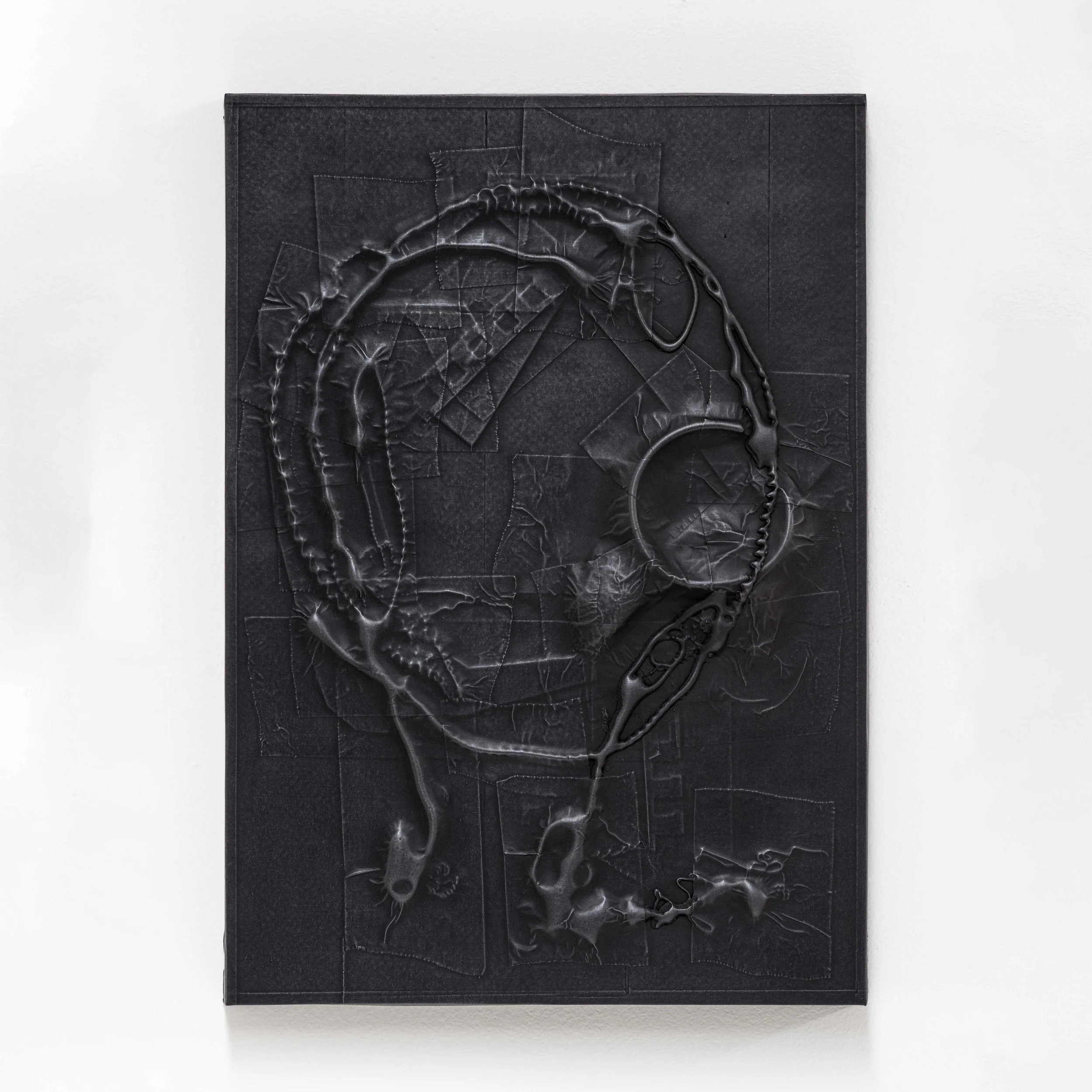
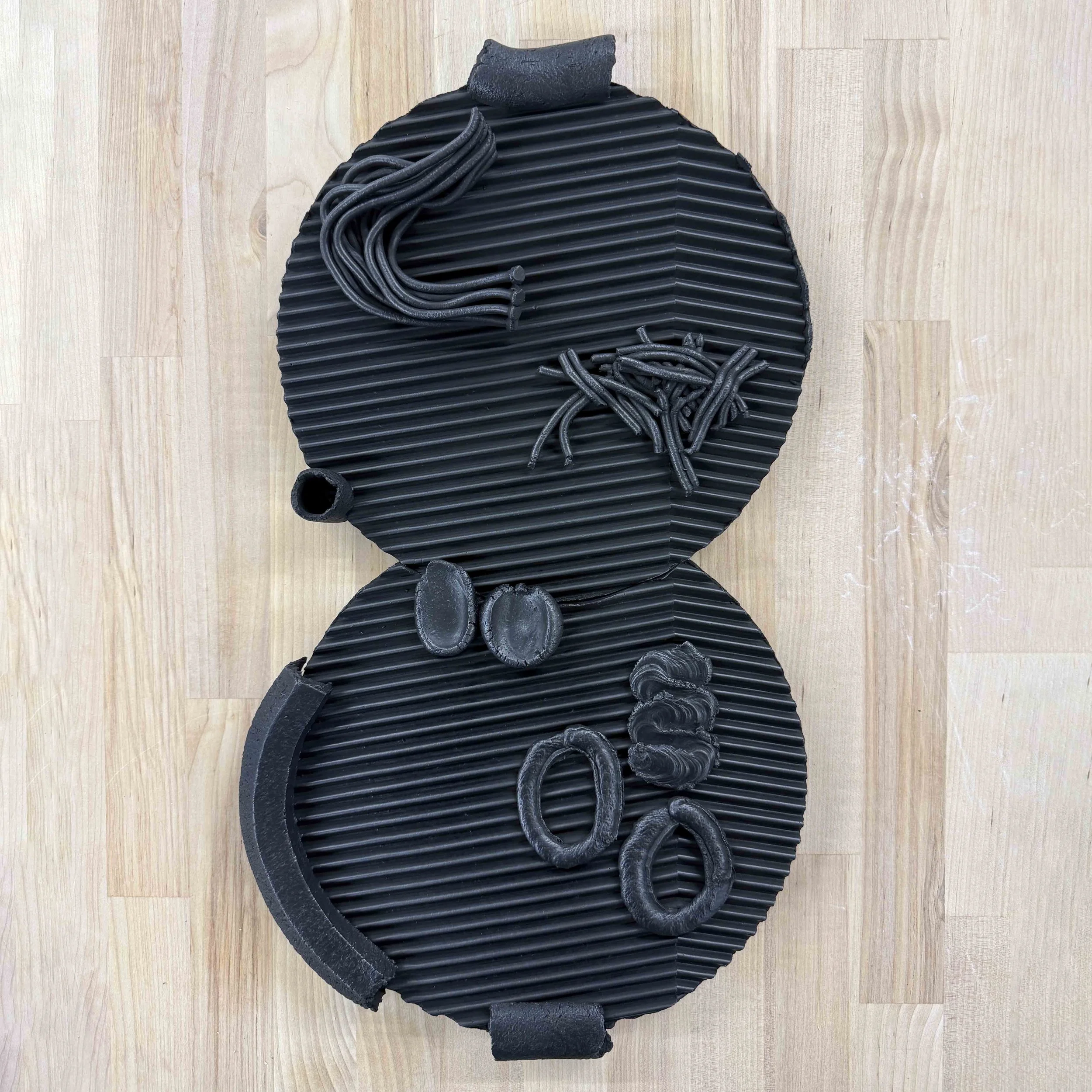
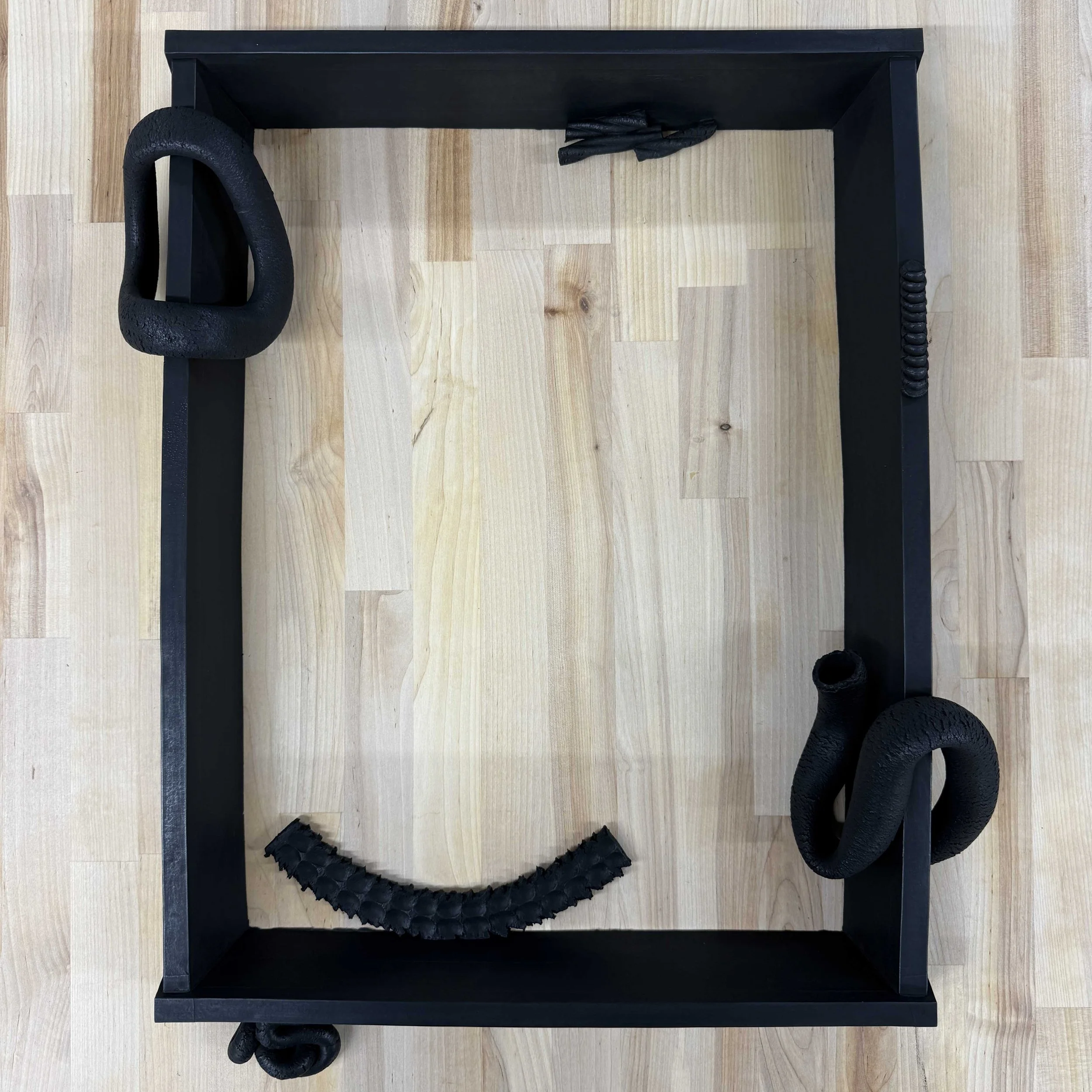
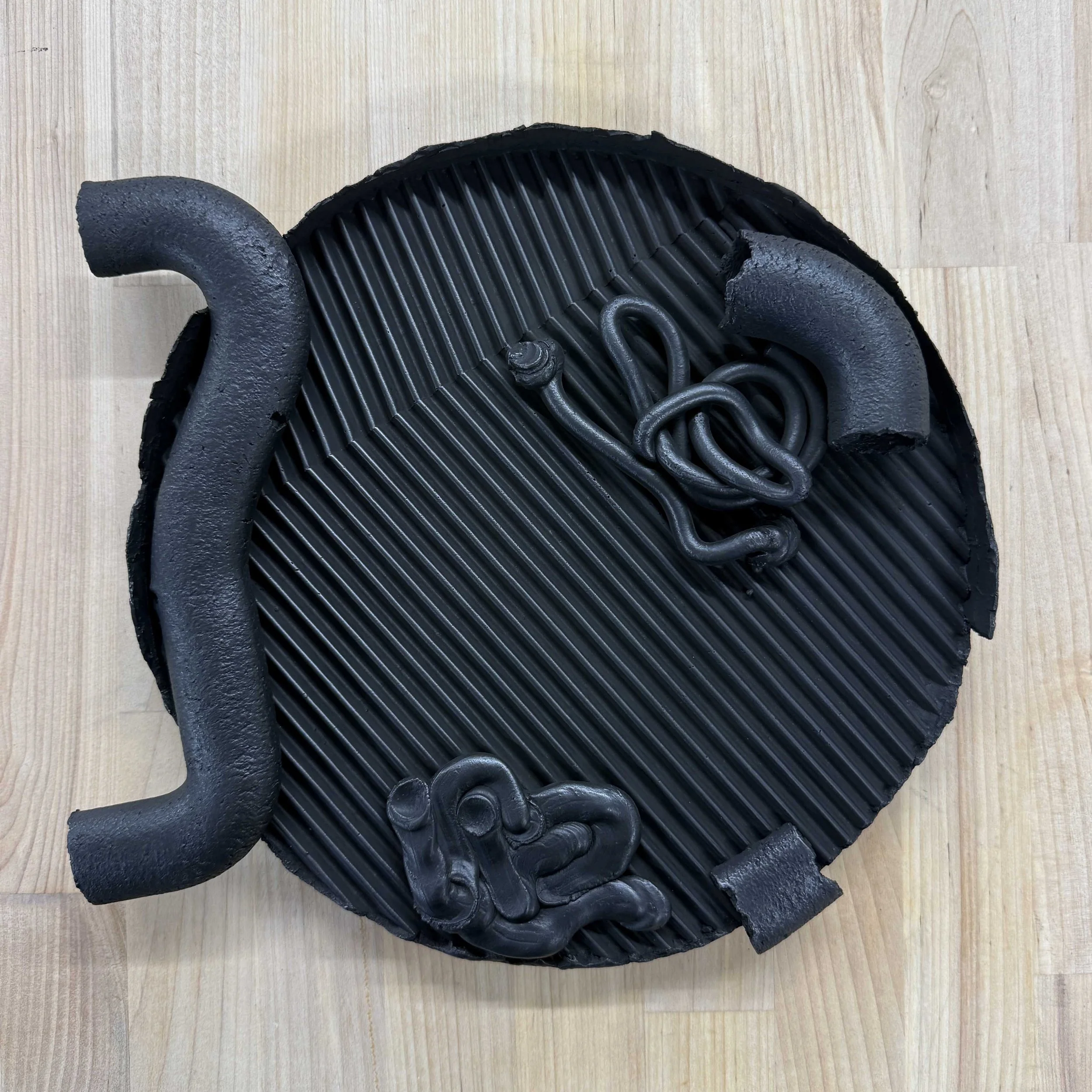
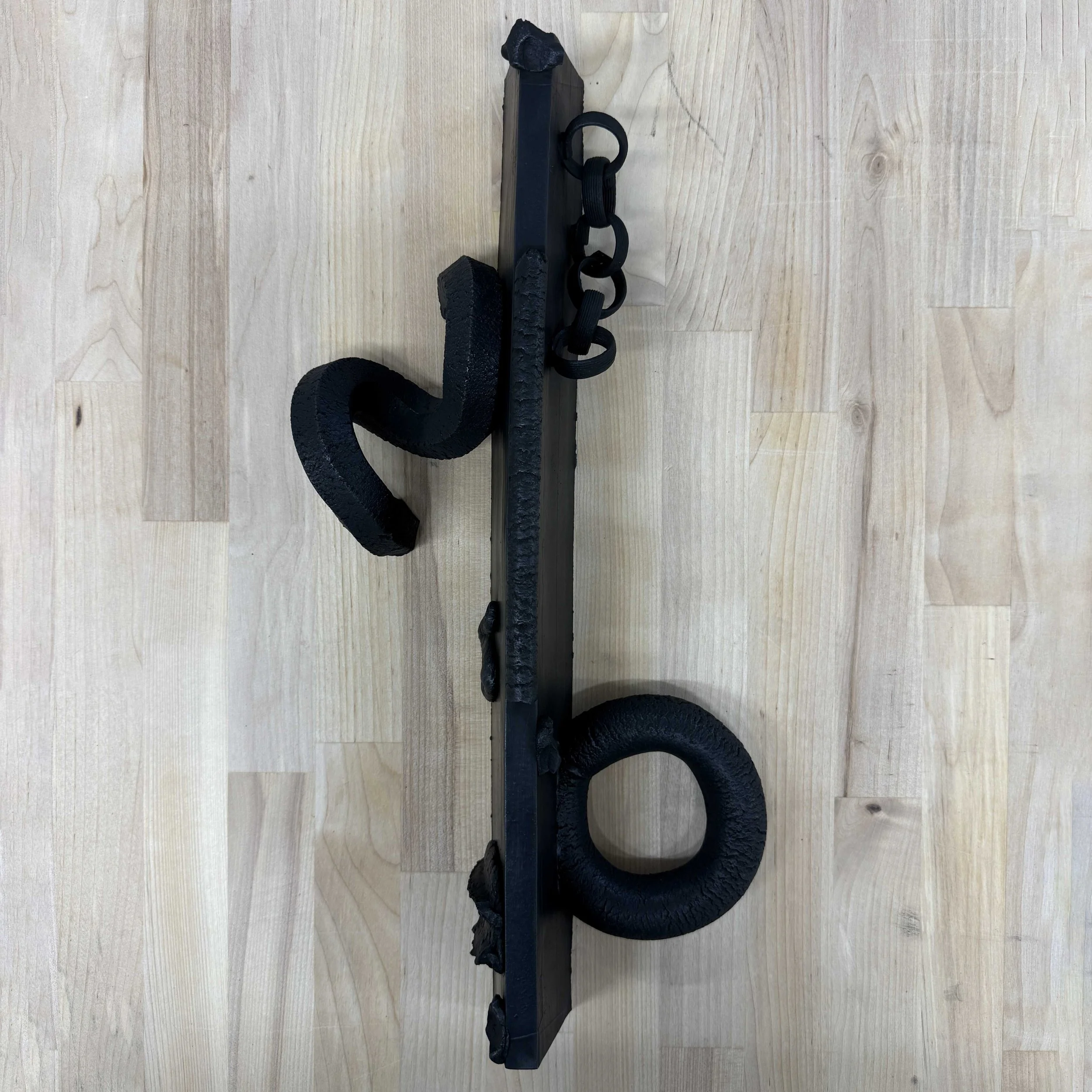
Produced during McConnell's residency at Belger Crane Yard, Closer Still introduces gestural immediacy into the artist's appropriative framework. The work began with drawings, sketches, and other incursions made directly onto images found in contemporary art magazines—physical marks imposed upon printed matter. These interventions were then photographed and used as departure points for sculptural work. Using a hand-held extruder, McConnell 'drew' with clay onto press-molded tile and frame structures, building forms through intuitive, responsive accumulation. The charcoal-finished surfaces maintain continuity with his sustained body of black ceramic work while the process itself privileges spontaneity—a mode of access distinct from the methodical constraints that characterize much of his practice.